Why I Felt Like a Failure — and Why That Wasn't True
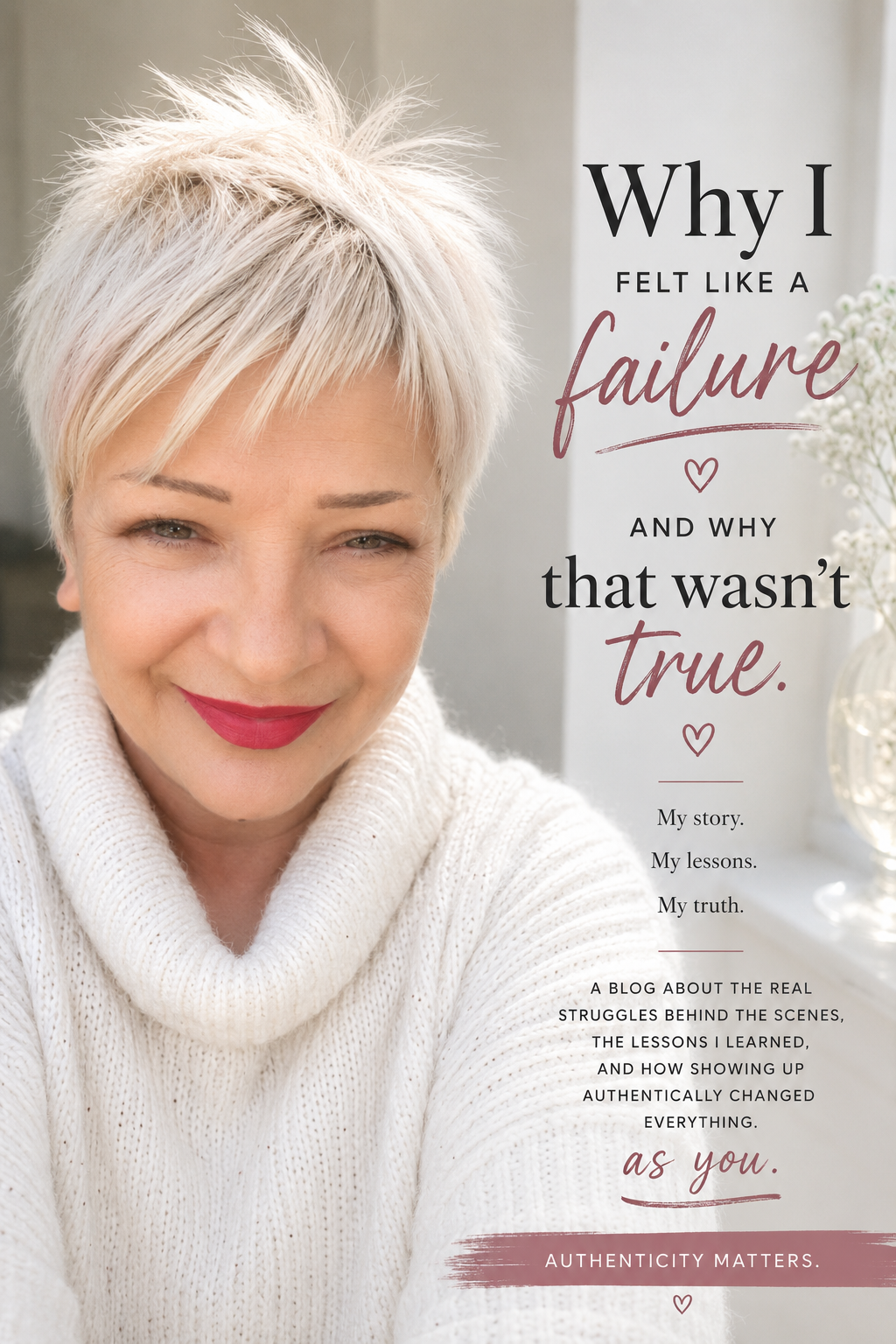
Why I Felt Like a Failure — and Why That Wasn't True
At one point, going back into a salon environment felt like the right move. It had been a long time since working in one, though hands-on creative work had never really stopped — the odd transformation here and there, still capable of the work itself. What was missing was confidence around people, and that wasn't really about hairdressing skill at all. A long-term abusive relationship had left deep trauma behind, a nervous breakdown and burnout followed, and grief over losing my mother, only eighteen months earlier, was still raw. Being around people, in that environment, was hard in a way that had nothing to do with whether the work itself was still there — and honestly, some of that still stands today.
The salon owner knew all of this from the start, and initially there was no expectation of being anything other than myself, doing the kind of work that actually fit. He's genuinely excellent at what he does — a real talent in cutting and barbering, particularly with bobs.
Once his stylist left, though, things changed. The pressure to fill that gap became real, and at times the way it was expressed felt unfair, and occasionally, cruel. None of that reflects his skill or talent — if anything, it was out of step with how good he actually is at his craft. But it happened, and it took a toll.
Foiling was never the niche. The pull had always run the other way — taking hair out of foils and dryness, back into condition, using the kind of visual, hand-painted colour work learned at Daisy's Hair Shop. Even there, colouring was never meant to be a big part of the work — transformations, not routine foil services.
Real product knowledge sat behind all of it too. Professional ranges like K-Pak and Joico had been bought and used long before any of this, out of genuine interest in the science, not just the marketing. Joico's work with molecular weight and bond-building was fascinating — understanding how differently sized molecules penetrate or coat the hair shaft changes how repair gets approached, not just surface shine. Cetrimonium-based conditioning ingredients had been part of that reading too, valued for how they soften and hydrate compromised hair. All of this predates the comeback attempt entirely — quiet learning in the background for a long time, and still ongoing; no claim to know everything, just a genuine commitment to bringing hair back to health rather than simply colouring it.
Most clients were coming in with genuinely dry hair, and that was exactly where the strength lay: rebuilding health and vitality into hair that had been through a lot. But loving hairdressing this passionately came with a heavy sense of responsibility to restore everyone's hair health — layered on top of the anxiety already there about being back in a salon environment, and the pressure building on all sides. That combination made an already hard adjustment harder still. Had things stayed on track, what could genuinely have been offered was a bespoke plan toward healthier hair — a transition away from foils altogether, toward colour work built around optimising condition, not just applying tint.
Not everything in that period went well, and there's no pretending otherwise. Genuine rustiness was part of it — some things came back quickly, almost like riding a bike, while other things needed real time back in the work — six months, a year, consistently — before full competence would have returned. Matching what foil work achieves through open-air technique wasn't one of the things that came back easily. Without the heat and incubation foils provide, results ran warmer than intended, and on at least a couple of occasions that didn't suit what the client actually needed. That was never a technique mastered to foil standard, and honesty about that held from the start.
There was one genuinely funny discovery in all of this too. Partway through some clipper work, a client gently pointed out that my face was practically an inch from their head — closer than any barber has ever needed to get. Turned out eyesight had quietly gone downhill without anyone noticing, least of all me. A trip to the optician confirmed it: proper prescription glasses were well overdue, and had been for a while. So along with everything else being relearned in that period, seeing properly again was apparently also on the list.
On top of the technical side, there was the simple reality of facing the public again after so long away, while genuinely frightened. The people around me knew how nervous things were — never hidden from them privately. But the shop floor demands a certain outward calm, or clients won't come at all. That's not dishonesty, and it's not some false self — it's just what the job asks of anyone facing the public, regardless of what's happening underneath.
It wasn't that everything went wrong. A model came from street casting, willing to try something different purely for the salon's social media. The first piece done on her was a fairly standard vivid transformation, green into pink and blonde — well received, nothing especially abstract. Later came something bolder: Aurora, built on the real science of how the northern lights actually appear — not the soft, blended version most people picture, but distinct bands of colour sitting side by side, unblended, because that's genuinely closer to what the phenomenon looks like. It won't be to everyone's taste, the same way real aurora photographs aren't as instantly pretty as a blended "unicorn hair" version — but that was never the point. That's just one example, but the pattern held: placement-led colour work — hand-worked, considered, built in stages — was where real skill lived. Foiling, the weaving, the patience it demands, was never where flow happened, and probably never will be.
Fitting in wasn't the only goal — helping was too. That model was worked with for free, purely to get something fresh out there for the salon. A well-connected industry contact also entered the picture — a friend of the salon owner's, who'd started visiting out of curiosity more than anything. Getting to know him over time led to genuine liking, and eventually a personal ask for his help. He seemed willing enough. Beyond that, reaching out to a college in another county became a personal project too — a contact from years back who might be able to help, purely for the exposure it could bring, with no benefit on this end at all. None of it came from a claim of being ready for show work — it came from trying, in every way available, to help someone struggling badly after losing his right-hand stylist. Real effort went into this, for him specifically — and it wasn't met with good treatment in return. Mental health took a hit on top of anxiety and trauma already being carried. Putting myself back out there like that, after everything, took real courage — and it deserved better than it got.
There's another layer to this, only fully understood since: going back into that environment happened only around eighteen months after losing my mother, nowhere near enough time to process that kind of loss — let alone the trauma around how she was lost. Support that should have been there by that point wasn't. Being back around people again, in a job built on constant conversation, meant honesty sometimes slipped out — being open with clients about where things stood, believing that honesty was the right thing. It wasn't, not there. Clients come in to feel good, not to carry someone else's grief. None of that was intentional; it's simply what happens when someone who hasn't processed something that big gets put back in front of people all day, every day.
Underneath all of this, other things were happening in personal life at the time that won't be detailed here — except to say that good treatment wasn't present anywhere during that period, and none of the accountability placed on me was ever truly owed. Paramedics were needed more than once, and hospital afternoons followed, because of panic attacks brought on by all of it.
Looking back now, this doesn't read as a failure of skill. It reads as a failure to hold a boundary. Knowing exactly what the work was, and what it was good at, was never in question. What was missing, at the time, was the strength to say: this isn't mine to carry, and stepping back needs to happen until things are set up properly. Things might have found their footing again — mistakes and all, the way anyone starting over does.
A great deal has been built since — systems, theory, artistry, real technical and scientific understanding within this niche. Owning a salon isn't something realistically on the table now, for reasons that go beyond confidence. But the thinking, the eye, the craft — none of that was ever the problem. It never failed. Protecting it, for a while, did.
That's really what this is about. Authenticity isn't just showing up honestly — it's also having the boundaries to stay standing once that happens. The first part was there. The second part wasn't, not yet.
If any of this sounds familiar — feeling pressured into being someone you're not, or carrying weight that was never yours to carry — please know you're not alone in that, and it's worth talking it through with someone you trust.
This story is about the importance of boundaries. The importance of remaining true to the self without deviating from that path through people pleasing or unmet needs.About how failures reframed are lessons and wisdom if we have the courage to look closer.
If you're struggling and need someone to talk to, please reach out:
Samaritans: 116 123 (free, 24/7) | SHOUT: text 85258 | Mind: 0300 123 3393