IT'S NOT ALWAYS ABOUT THE MONEY
Inventing With Empty Pockets
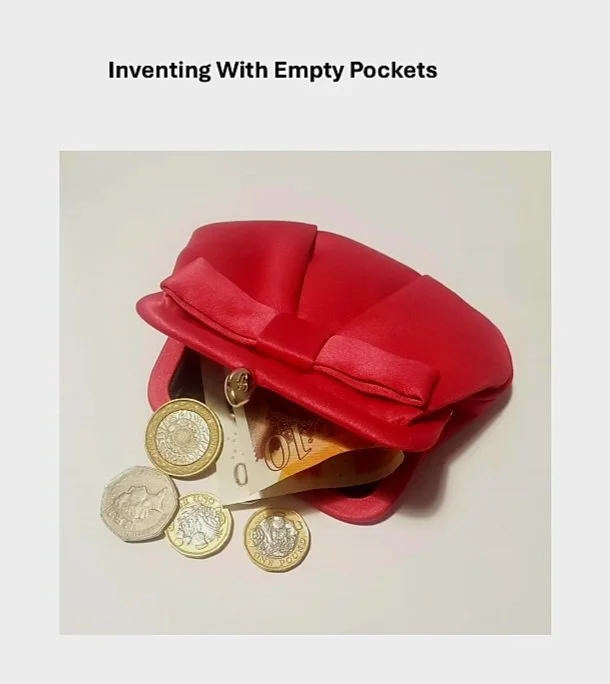
Some of the most honest creations are born from nothing but what we can reach. In the moments when our pockets are almost empty, imagination becomes far more resourceful, and our eyes get sharper. We start seeing every discarded thing not as rubbish, but as possibility.
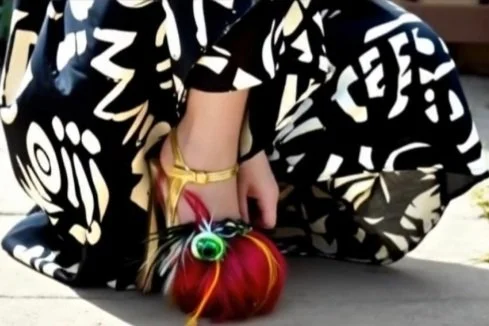
Take the things most people would throw away or never think to touch. Household bleach, painted onto a black dress in tribal-style patterns, then washed out quickly once the colour had lifted just enough. A cheap synthetic wig, coloured and cut despite its lower quality, simply because it still works as a way of experimenting and growing — and often leads to better technique once better materials become affordable. Fabric scraps become a backdrop, or get ruffled and gathered into an outfit. None of it has to be perfect. It just has to get made.
We learn to see differently this way. Every project carries a history, and by reaching for what's already lying around, we give that history a second life. It's less about making do, and more about discovering what was already waiting to be transformed. Reality, in the background, can be genuinely difficult — but creating, even in small, scrappy moments, holds a kind of joy that doesn't ask permission from circumstance first.
We do it on a shoestring, because most of us have no other choice if we want to be creative at all. That's worth saying plainly to anyone hesitating: don't wait for the right conditions before you start. Just allow yourself to live in the moment you've actually got, the one carved out from the drudgery of ordinary life, rather than the one you're hoping arrives later.
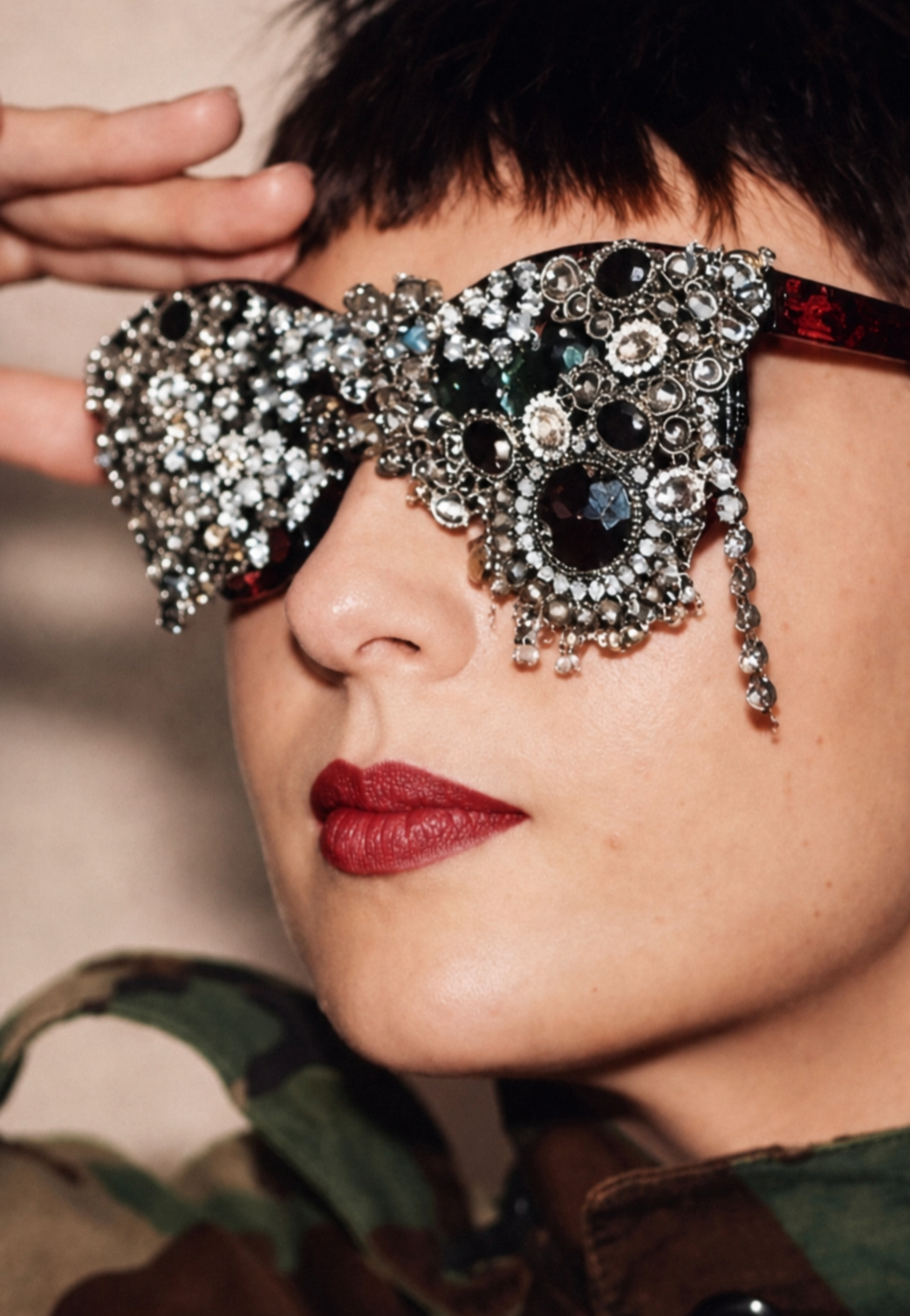
As confidence grows, the simplest tool can become the most versatile one. A second-hand wig instead of professional materials. A mobile phone or an old camera instead of studio equipment. Sometimes a generous photographer steps forward, offering skill for free simply because they believe in the vision in front of them. Sometimes there's no model available at all, and the only option left is to become your own subject — uncomfortable, maybe, but a genuine way of learning self-reliance, patience, and how to direct from both sides of the lens at once. And sometimes people show up not chasing exposure or a portfolio credit, but because they genuinely love what's being made — becoming collaborators, friends, even muses, bringing their own energy into the work.
One small, affordable lighting kit can outlast almost anything else in the kit bag — not the kind used in glossy studio shoots, but enough to control shadow, highlight, and atmosphere even in the most makeshift of rooms. A humble light, turning ordinary spaces into something closer to a stage.
Inspiration rarely waits for resources either. Channelling an artist like Yayoi Kusama doesn't require her studio or her budget — it can mean hand-painting dots onto a wig late at night, braiding thin wire into strands so sections arc and float, building something gravity-defying out of almost nothing. Channelling Grace Jones's sleek, powerful energy doesn't require her couture wardrobe — it can mean cutting and tailoring fabric scraps and thrifted material until the silhouette finds its own sharp edge. Drawing from Keith Haring doesn't require a gallery — it can mean stitching and painting tribal-inspired patterns by hand, echoing someone else's bold, rhythmic lines in an entirely personal way.
Even footwear can become a canvas. Coloured hair strands, woven through an ordinary pair of shoes, can turn them into something one-of-a-kind — part sculpture, part fashion statement, alive with movement and colour that nothing off a shelf could give you. Wooden skewers, tape, and spray paint, pushed into a foundation, can become a headpiece nobody's ever quite seen before — strange, spiked, entirely unrepeatable.
None of this is about copying anyone. It's a conversation — with materials, with admired artists, with whatever's actually within reach — and it's told in each person's own creative language, sometimes shaped directly by scarcity and invention. Constraints don't just push us toward creativity. They rewire the way we see in the first place.
In the end, it was never the lack of money that defined the art. It was the abundance of imagination that limitation unlocked — the ability to stand in a bare room with only a wig, a handmade dress, shoes laced with strands of colour, a humble lighting kit, and a willing friend, or even ourselves, and still make something that feels entirely individual.
Go and think for yourself. The world has enough copies.