Cubist Influenced Hairstyles
When Picasso and Mondrian Meet the Salon
In the early years of the twentieth century, two artists changed what a picture could be. Picasso and Braque dismantled the old order of single-point perspective — the idea that a painting should show one thing, from one position, at one moment. In its place, they built something more radical: an image assembled from multiple viewpoints at once, reality fractured into geometric planes and reassembled as something that could only be understood as a whole. A face shown from the front and the side simultaneously. A guitar broken into its component planes and laid flat. The result wasn't confusion. It was a new kind of truth.
Mondrian took a related idea somewhere else entirely — stripping the representational world away completely, down to its most elemental components: primary colour, black line, white space, geometric precision. A Mondrian composition isn't a picture of anything. It's colour and geometry as pure language, every block sovereign, every line deliberate.
More than a century later, that same instinct shows up in a salon chair. Hairdressers have channelled both traditions — swapping oil paint for hair colour, scissors for brushes, translating geometric abstraction into something wearable. The ideas are avant-garde by design. The execution still has to sit on a real head, in the real world, and hold up.
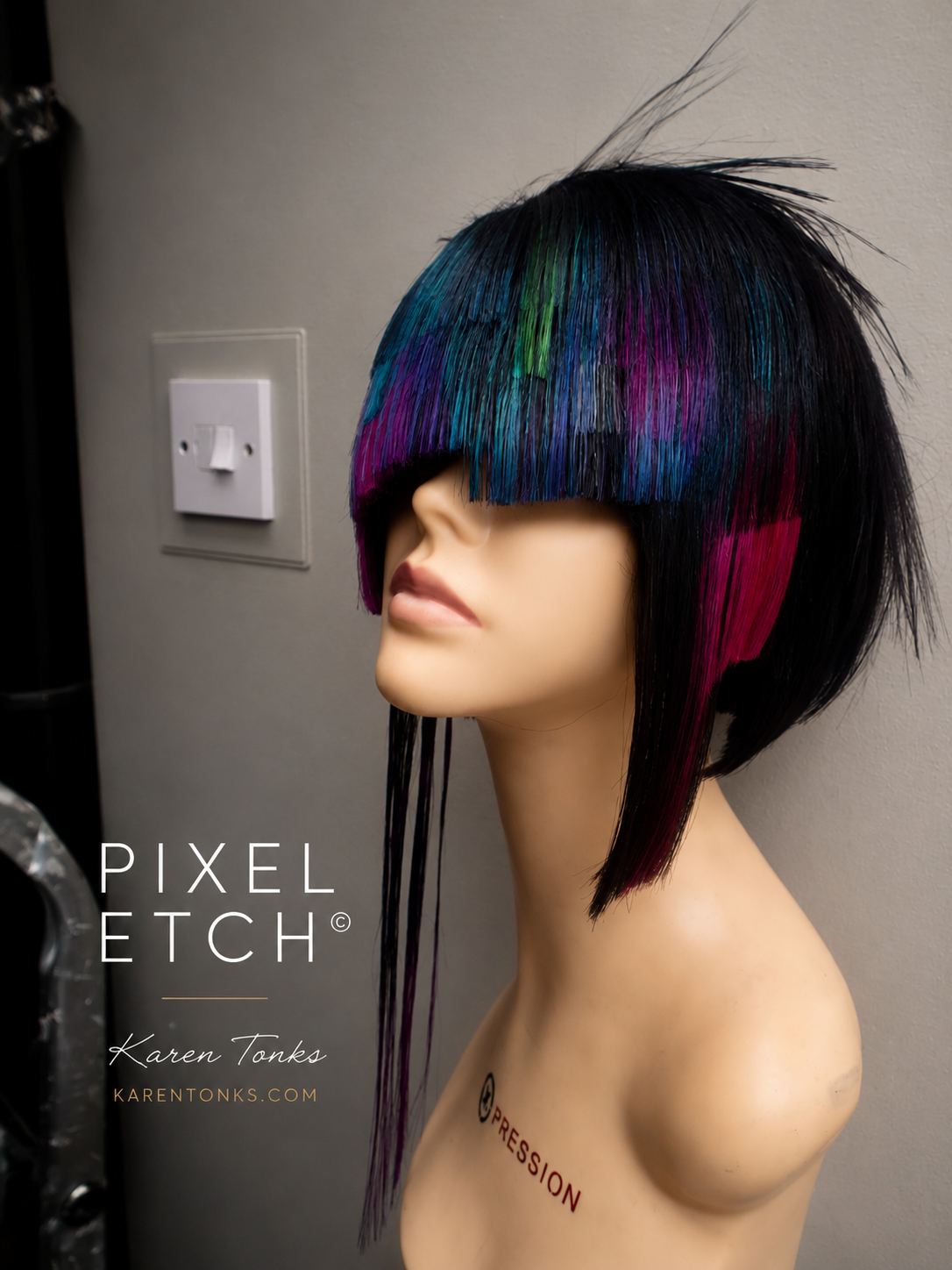
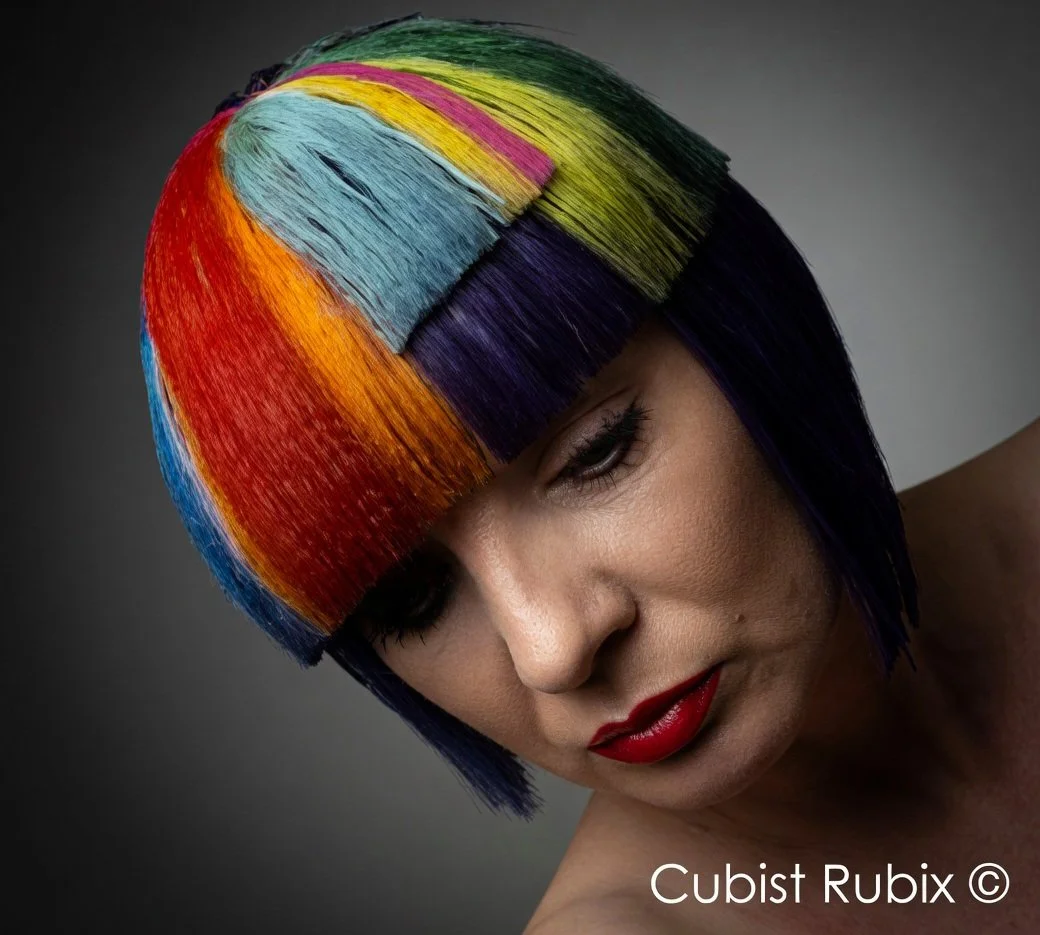
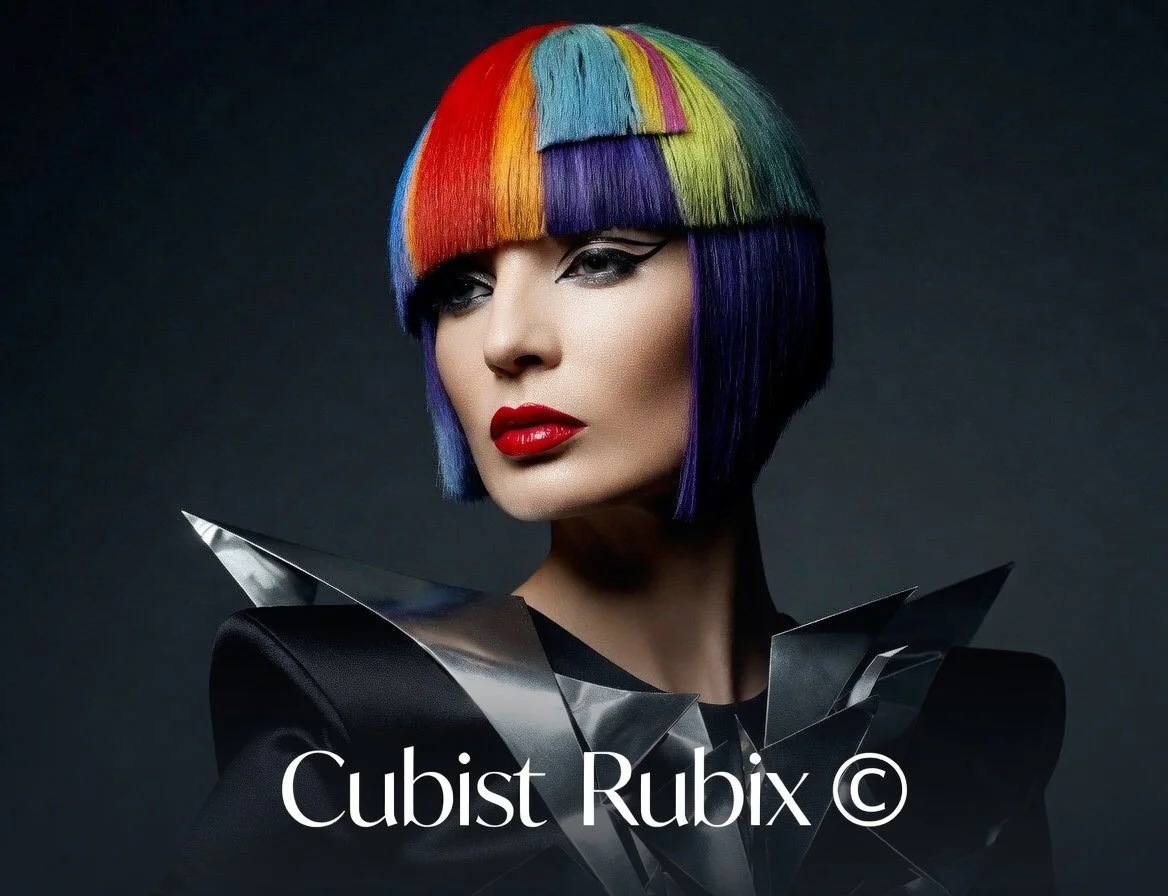
That tension is the whole point. Cubist hair isn't about cutting or colouring more dramatically than usual — it's about rethinking form entirely. Layers that don't follow the expected flow, intersecting instead at sharp, deliberate angles. An asymmetrical fringe that disrupts the horizon line of a face. A silhouette that changes character depending on which side it's viewed from. Colour playing by new rules too — sections held in flat planes of contrasting tone, shifting from shadow to brilliance as the head turns.
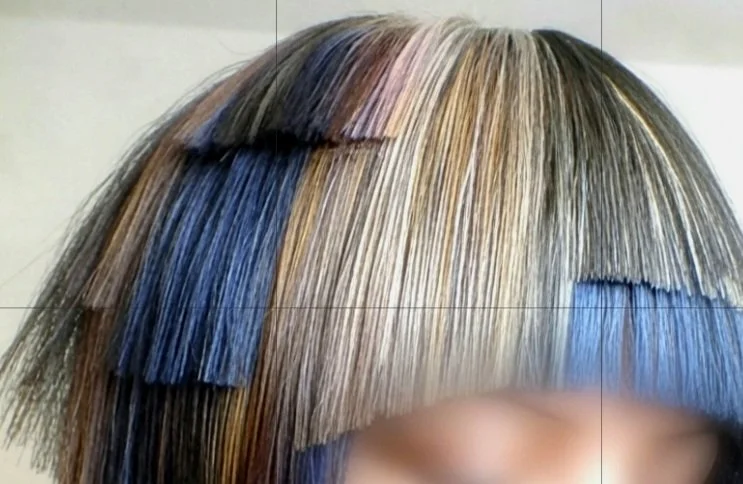
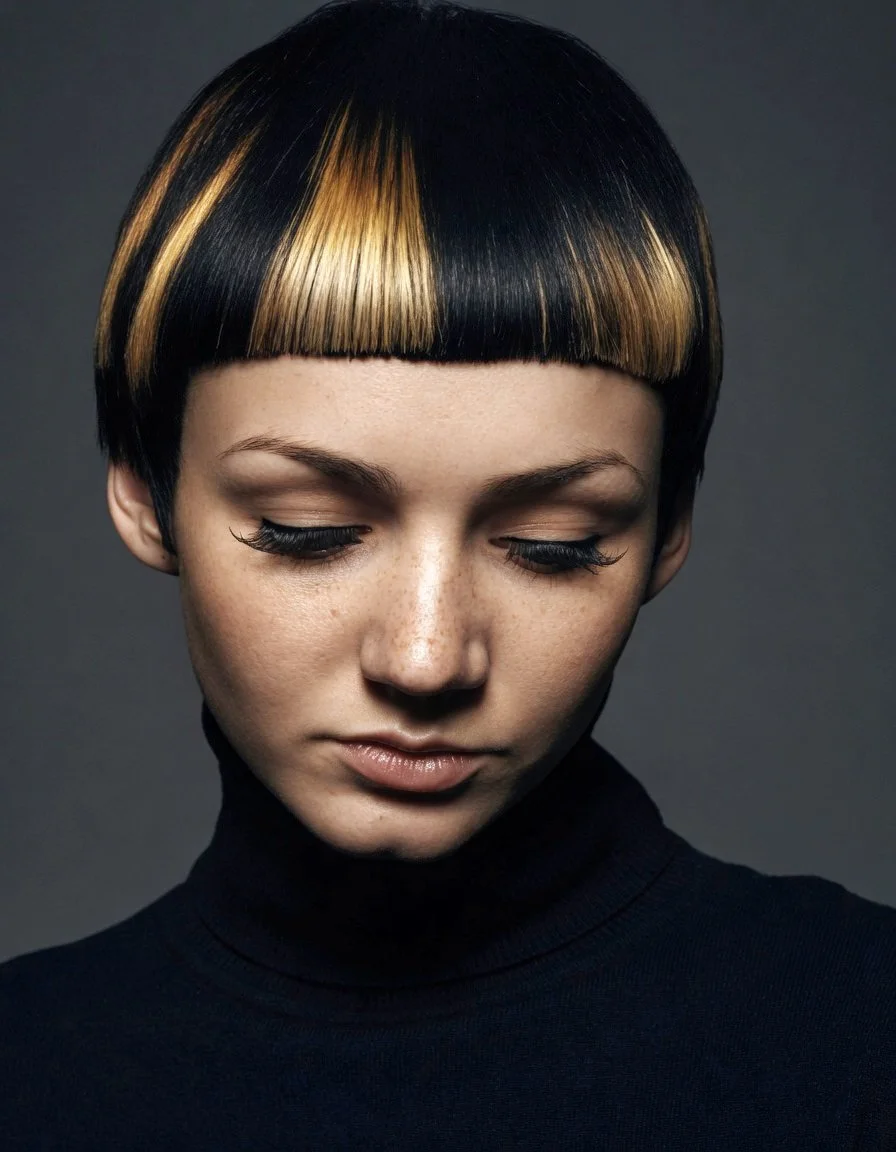
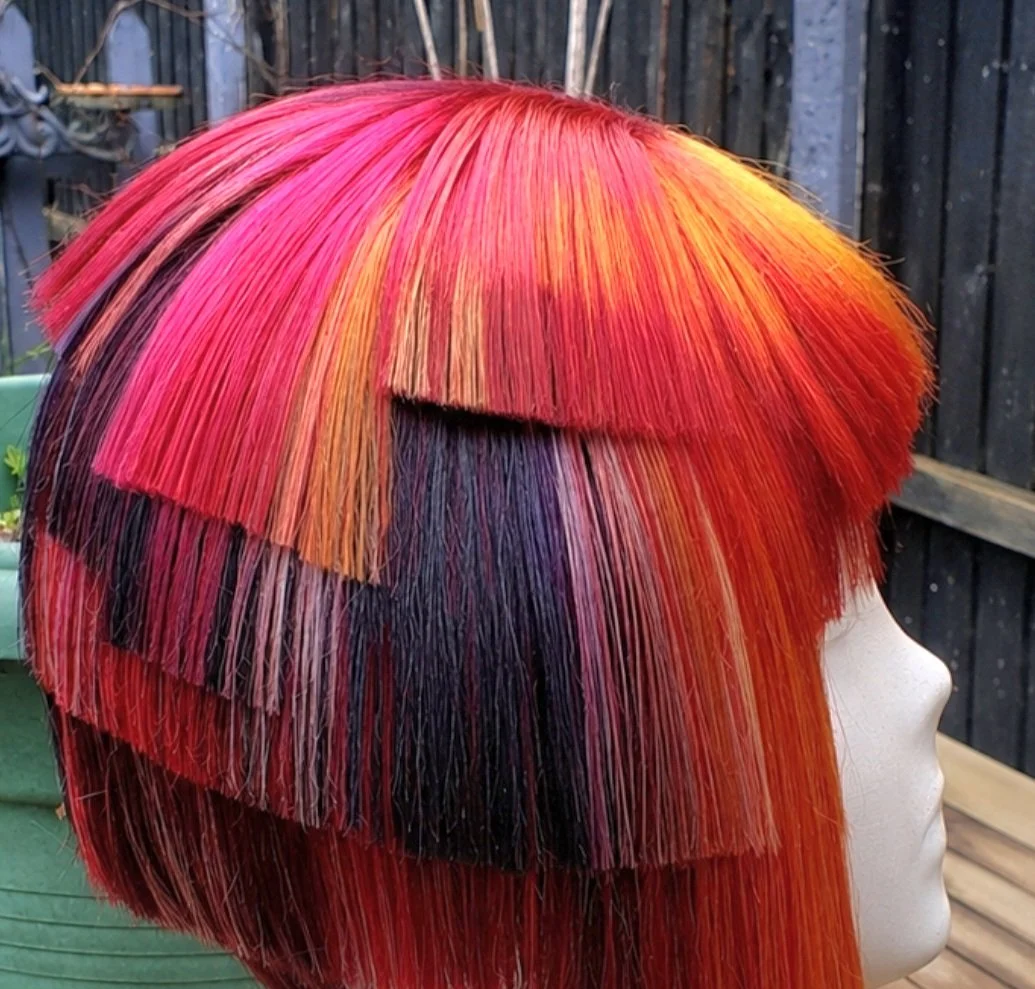
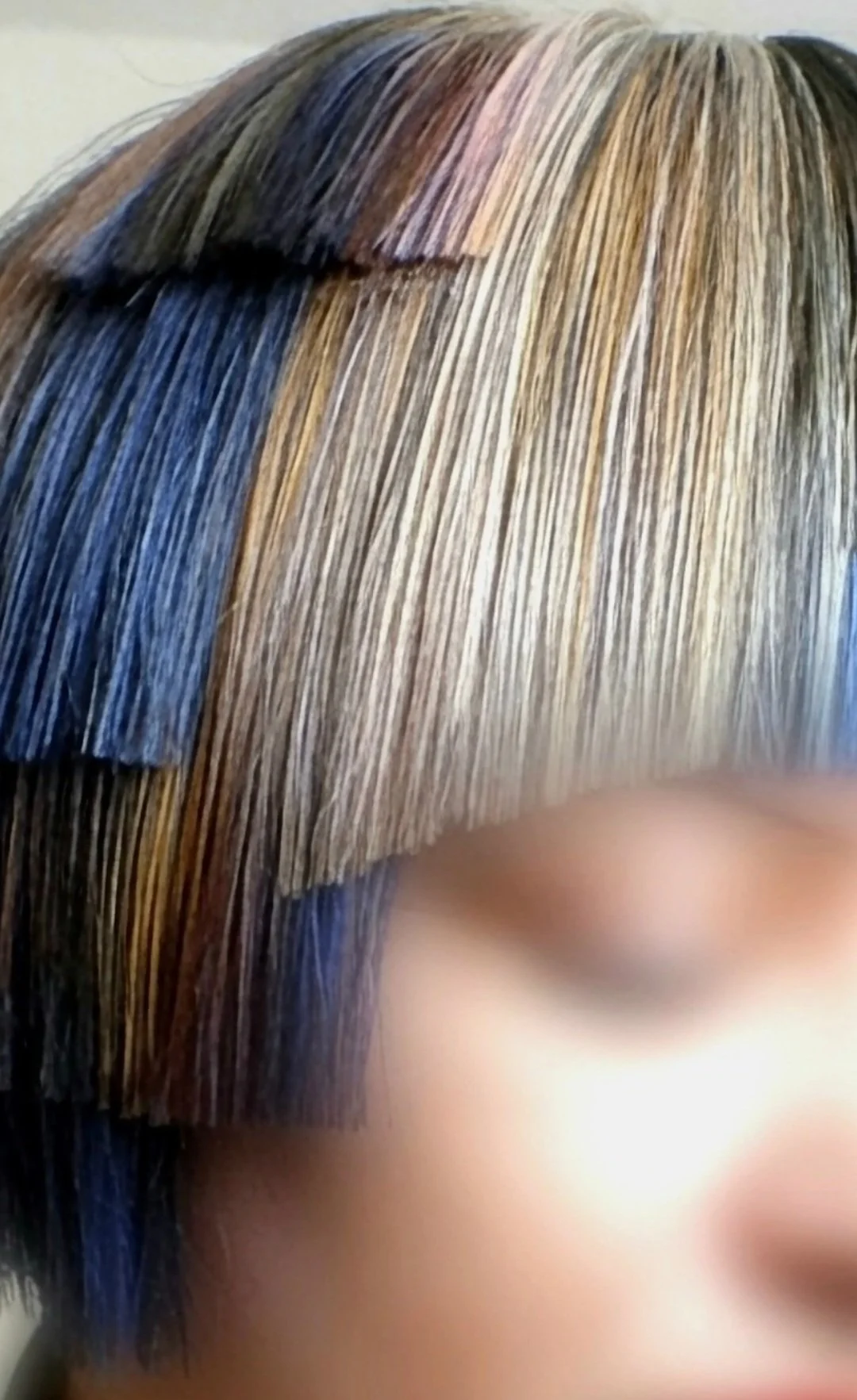
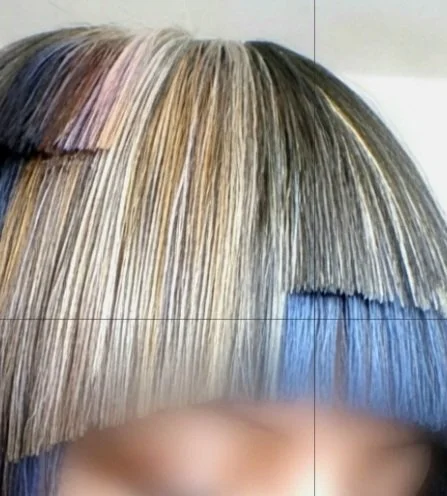
The geometry can stay subtle. It can live in something as simple as a bowl cut with colour blocked precisely into the fringe, warm caramel and tan laid in triangular sections against a dark base — the fragmented-plane effect of a Cubist painting, without a single radical incision anywhere in the cut itself. Step back and it reads like a painting. Step forward and it's a sophisticated, wearable haircut. Just one slice or sub-section of colour, peeking through a style with real weight behind it, can look genuinely striking while staying simple in design — that's often the more commercially honest version of the idea, closer to patchwork than full abstraction.
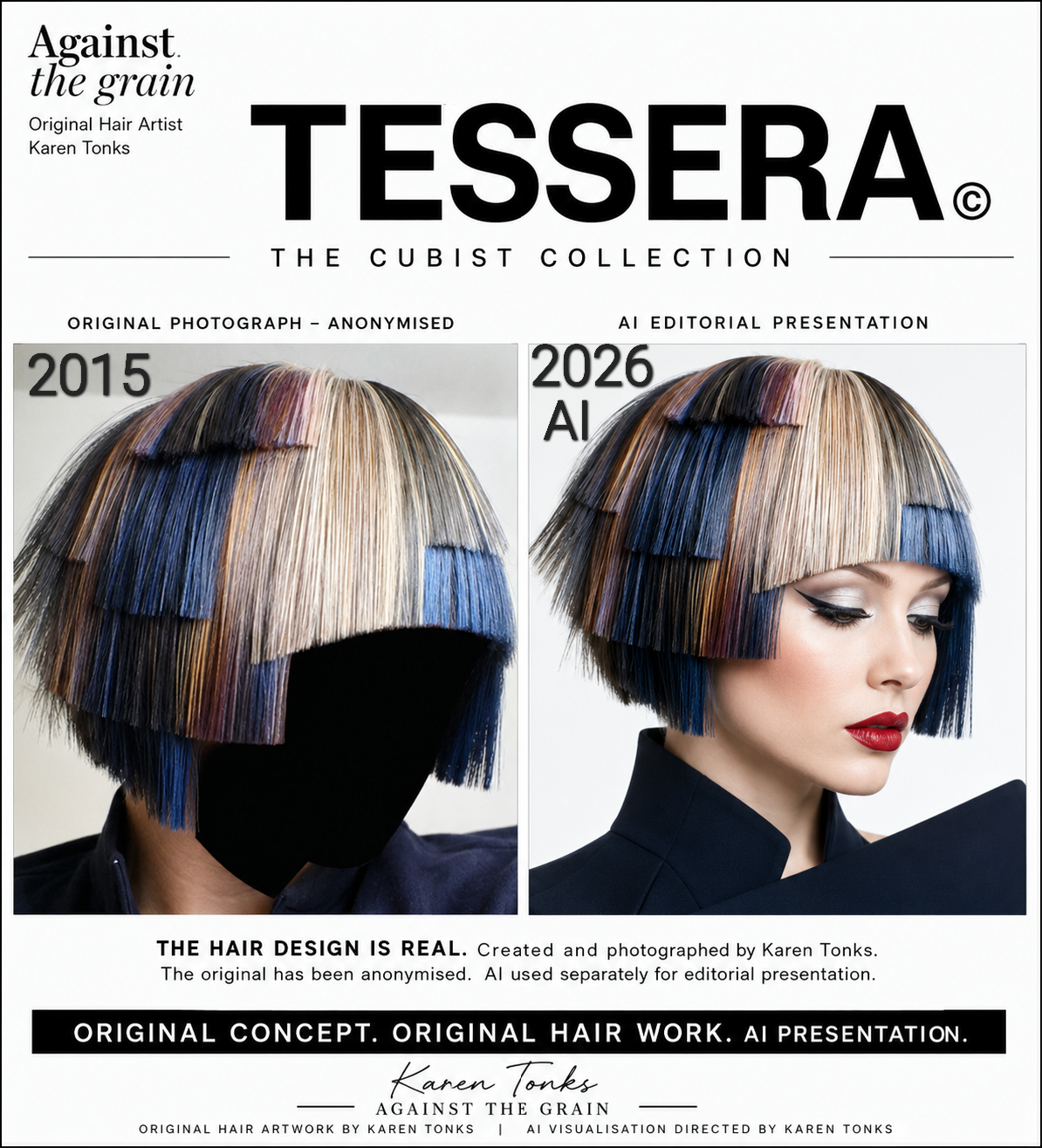
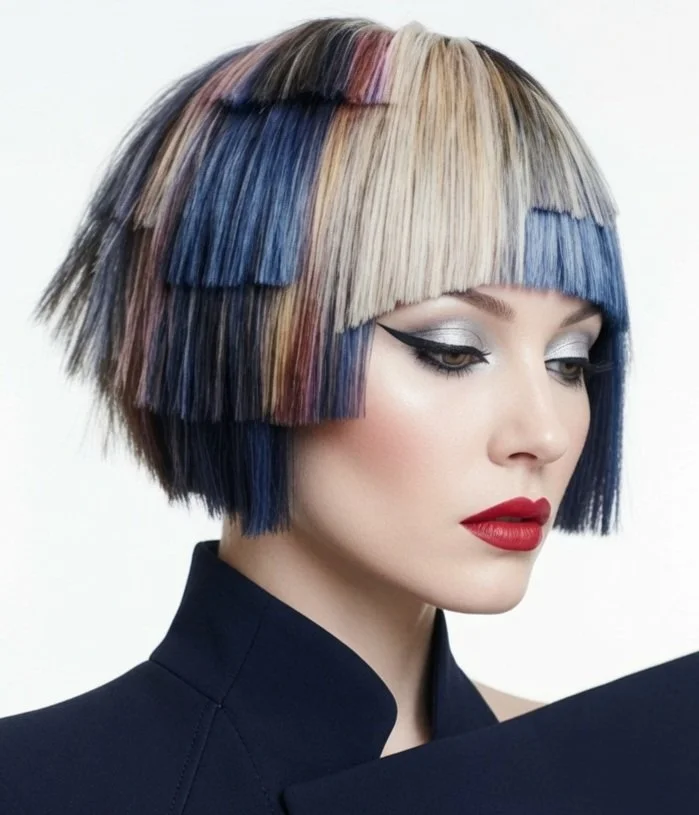
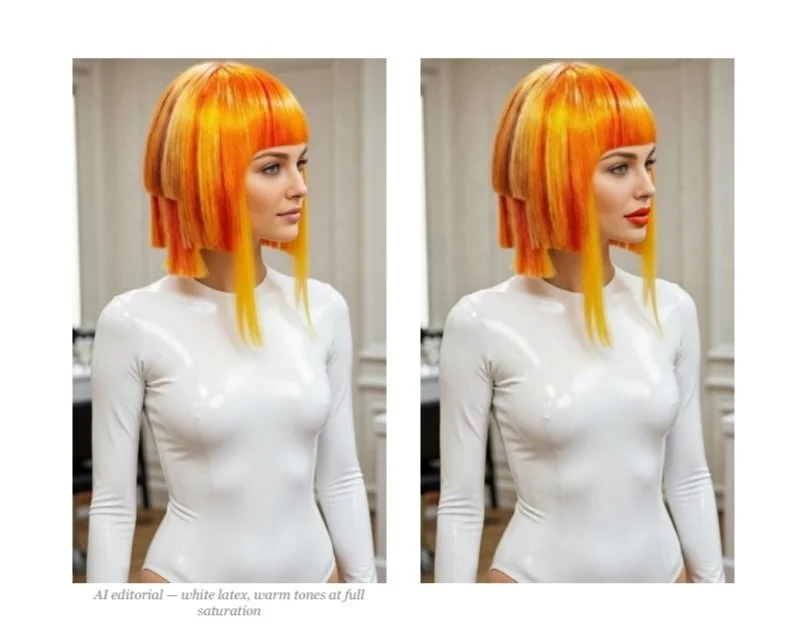
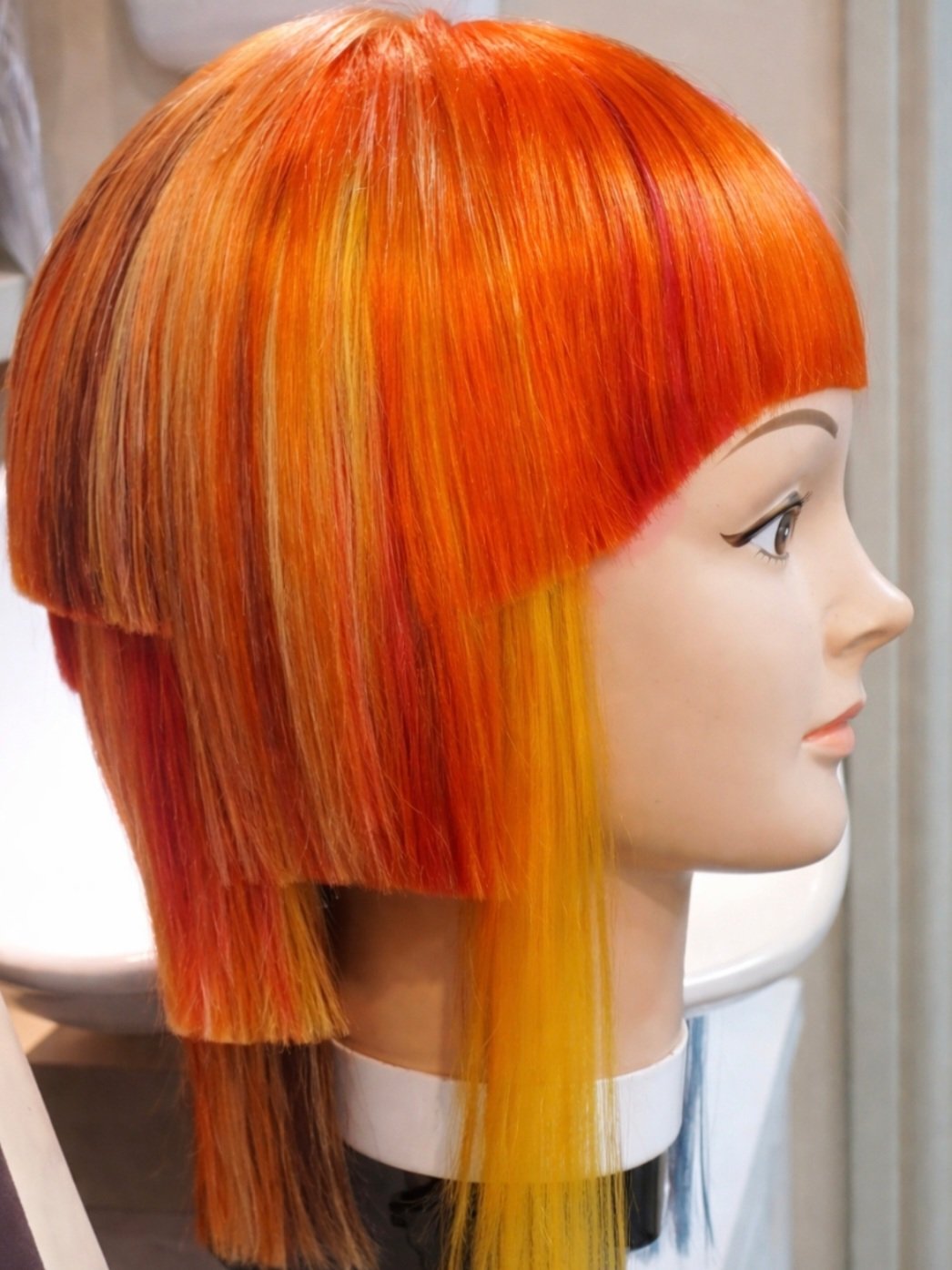
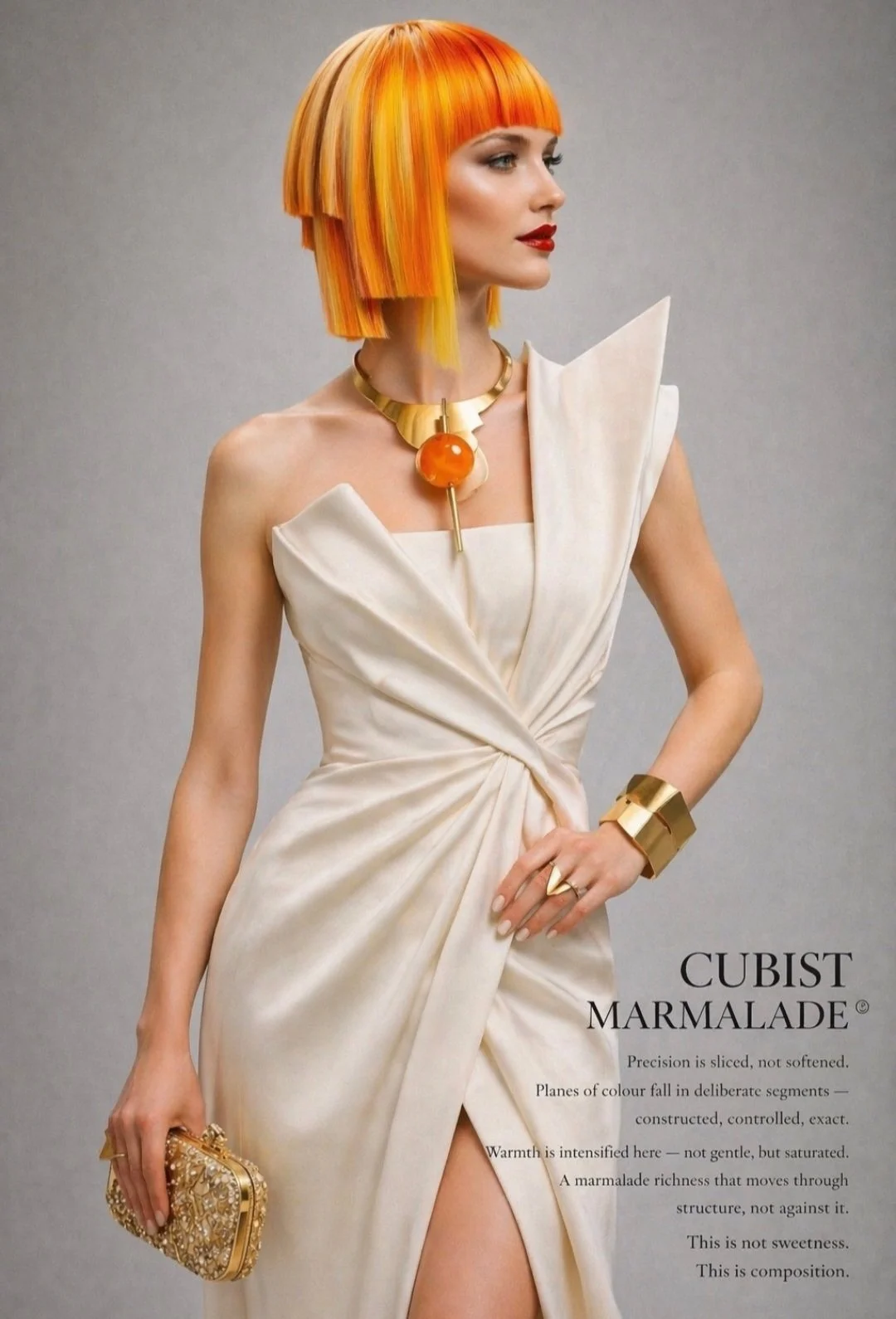
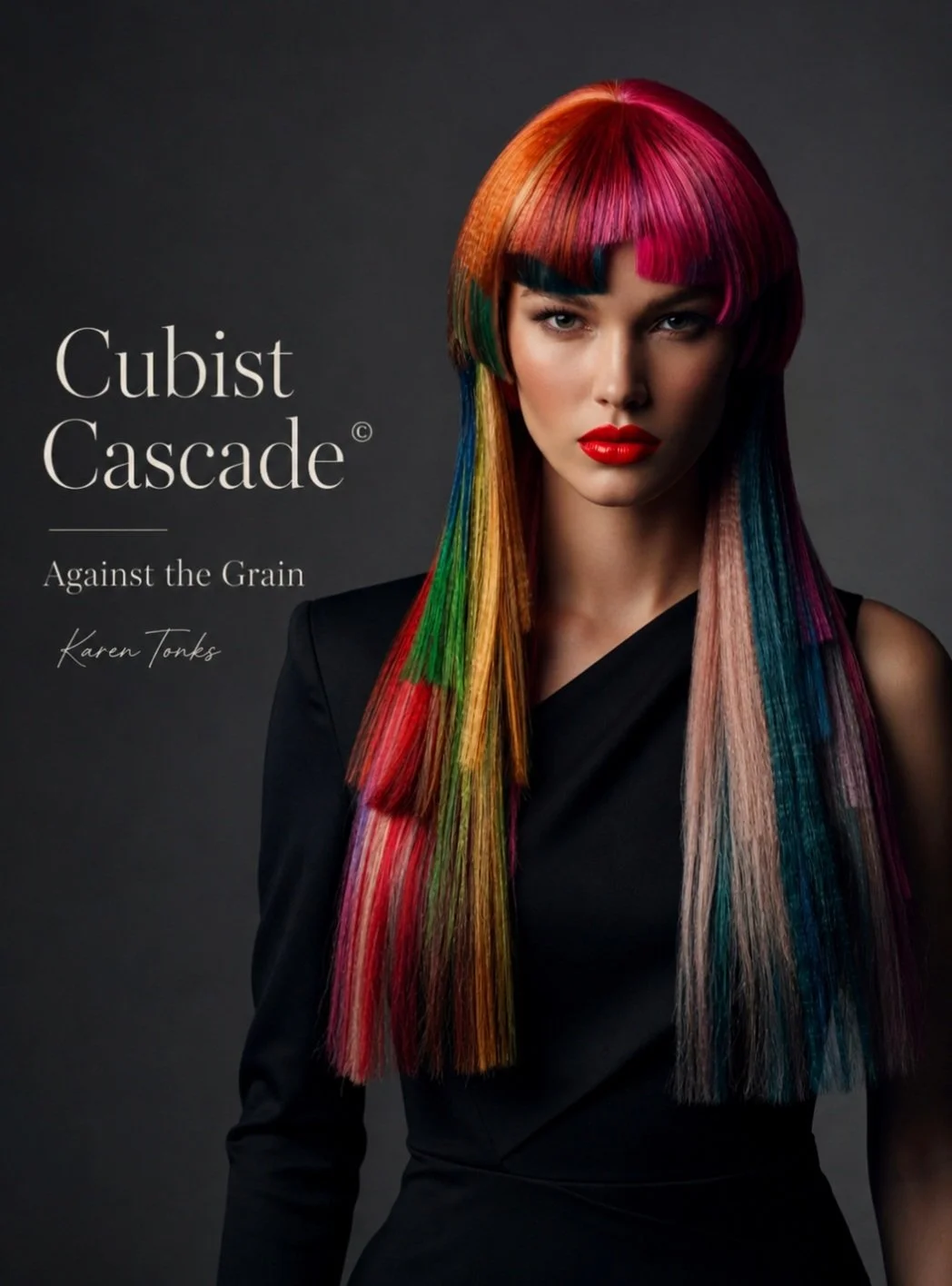
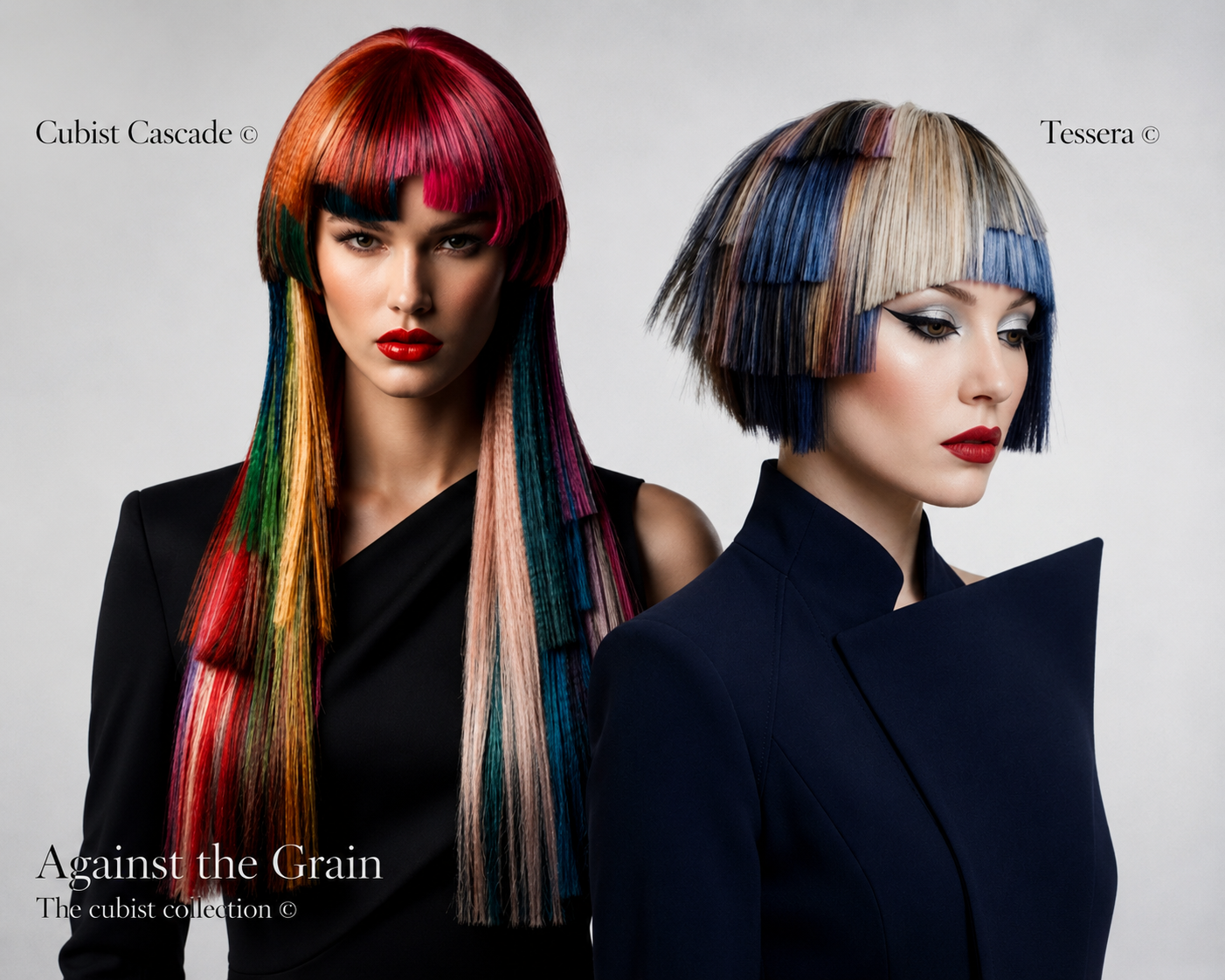
Or the geometry can go all the way. Layers staggered at blunt, deliberate angles rather than conventionally graduated, each one sitting at a specific point relative to the next, building a tiered, faceted surface that changes entirely depending on the angle it's viewed from. Colour follows the same logic — each plane allocated its own tone, each tone held inside its own defined section, nothing blended, nothing softened at the edges. Steel blue beside pale blonde beside deep mauve beside dark navy, each one a deliberate, separate statement rather than a gradient. The warm end of the spectrum can carry the same architecture and read completely differently — vivid orange, burning amber, bright yellow, pale gold, colours that don't whisper, that vibrate against each other and catch the light differently with every small movement of the head.
Mondrian's own grid logic translates almost directly: primary colour as sovereign block, separated by clean structural lines, each colour complete and uncompromised within its own space. Push that into the full visible spectrum rather than just the primaries, and every section says its own thing. Together, they say everything.
For anyone wanting to actually build something like this, a few honest technical notes matter. Suitability comes first — curly hair won't hold this kind of geometry cleanly, but straight to wavy hair, especially with the blunt cutting these subsections need, carries it well, since the natural weight holds down any slight wave. The finest results tend to come from straight hair with medium to fine density, though there's always an exception to that rule. Start by establishing the overall shape at the perimeter — nape and front — with a genuinely planned vision before cutting anything further, deciding early whether the edges should feel soft and whimsical or sharply geometric, since that choice shapes everything built on top of it afterward. From there, subsections can be cut first and coloured after, or coloured first and cut into afterward — both work, depending on the look. Pre-lightening matters too, since a bold palette of electric blues and limes against natural shades needs a different lifting strategy than something more restrained, and any bleaching service should be checked for suitability before it happens.
A human hair wig is one of the most valuable tools available for this kind of experimentation — full freedom to colour, bleach, and build without the constraints a real, living client and their real life inevitably bring. The construction itself can be genuinely complex and time-consuming, layer built on layer, colour built on colour, but once it's finished the style tends to pop in a way that rewards the patience. And it doesn't have to mean a full head of Cubism — a single section on a fringe or to one side can carry the same idea in miniature.
None of this is really about being cutting-edge for its own sake. It's about creativity, about not letting a craft go stale, about viewing hairdressing through a different lens than the one used every single day at the chair. Every person who looks at a piece like this brings their own emotions, their own associations, their own subjective read — which is exactly as it should be. These ideas were never likely to become the next commercial trend, and that was never really the point. The point was to keep the artistry alive, and to remember that inspiration is everywhere, if we're willing to keep moving toward it.
Go and think for yourself. The world has enough copies.