DO WE KNOW HAIR?
Hair Under the Lens: Why Understanding the Fibre Matters
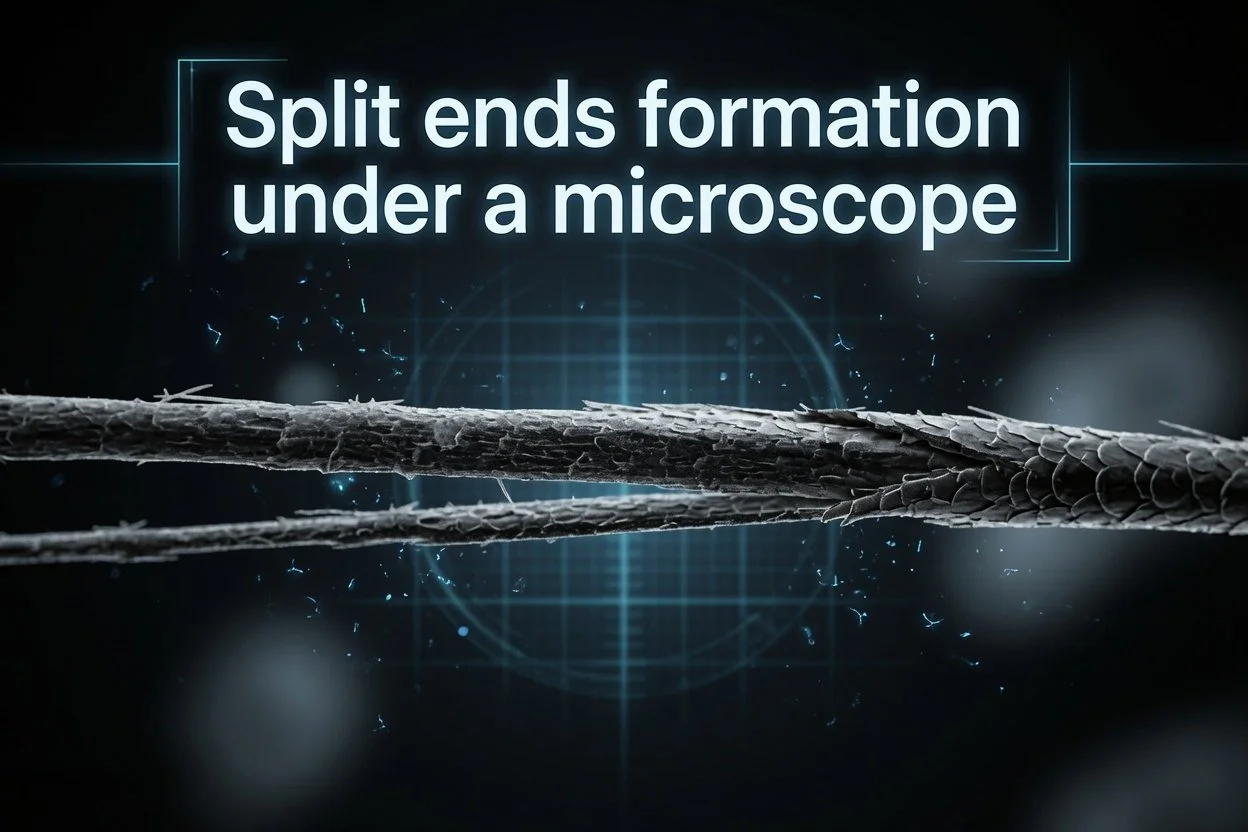
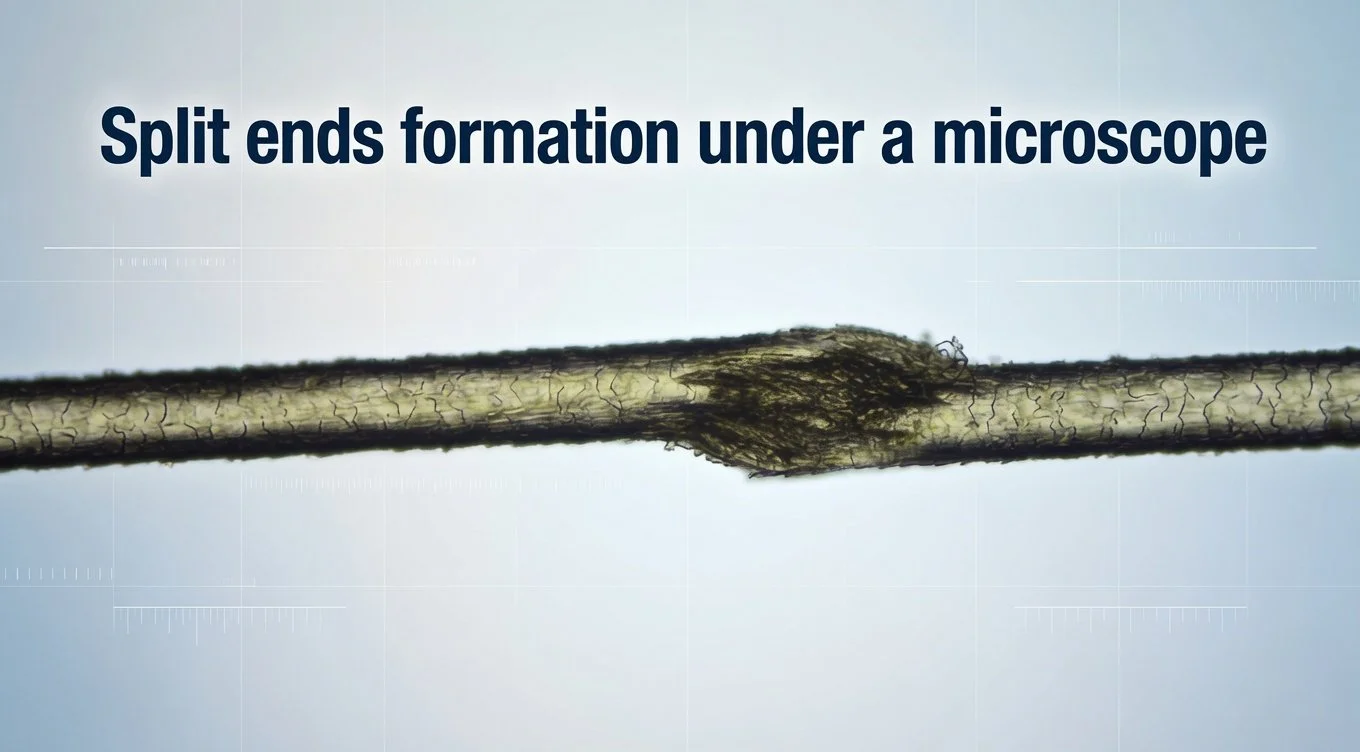
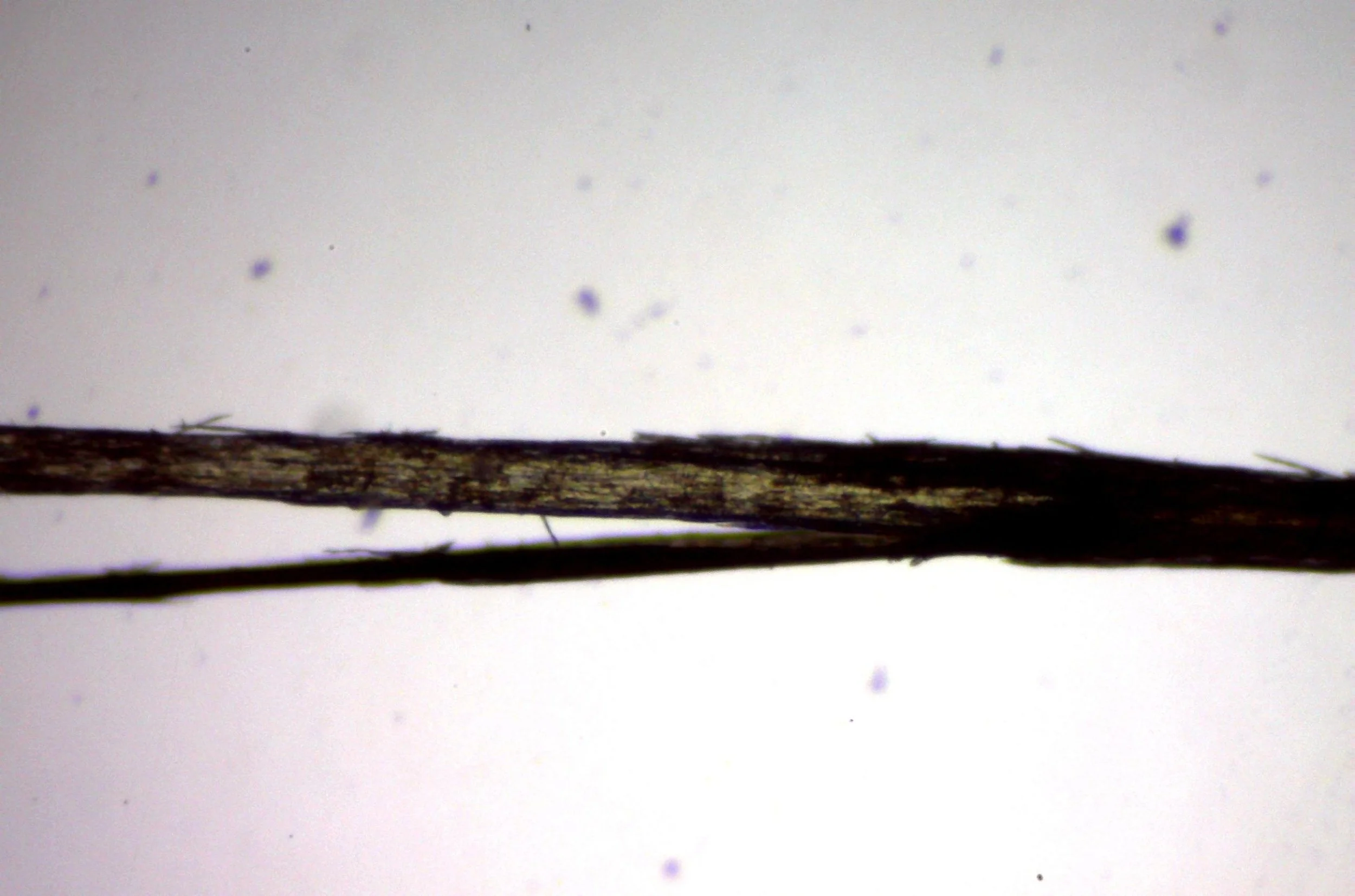
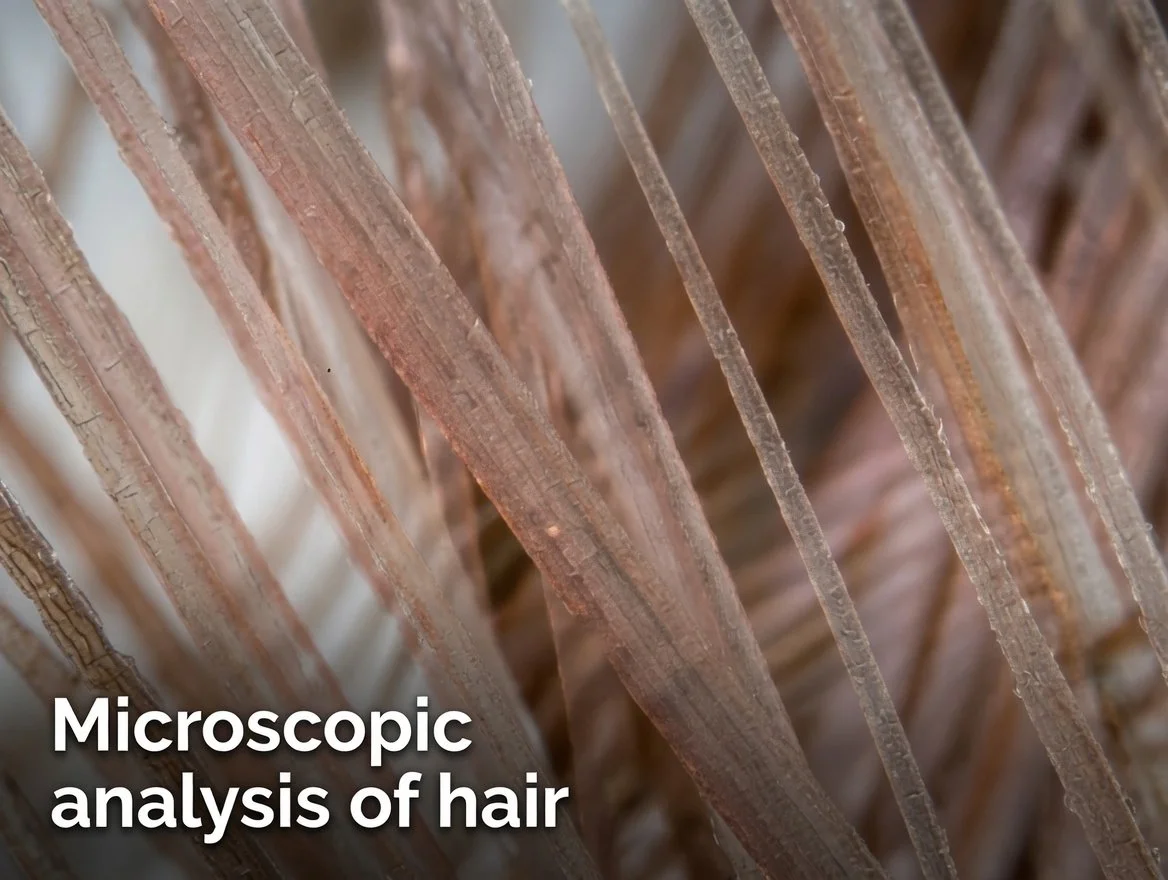
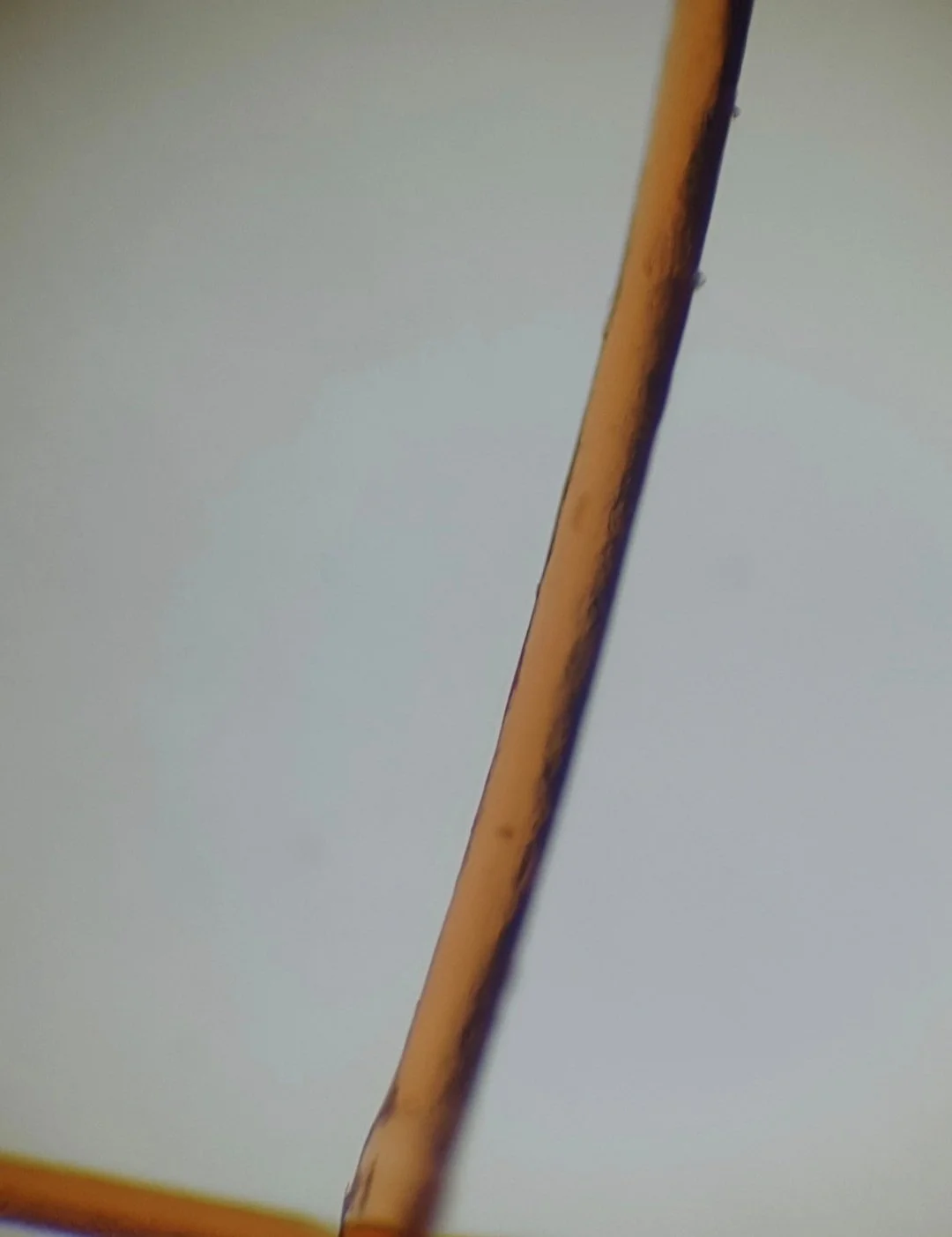
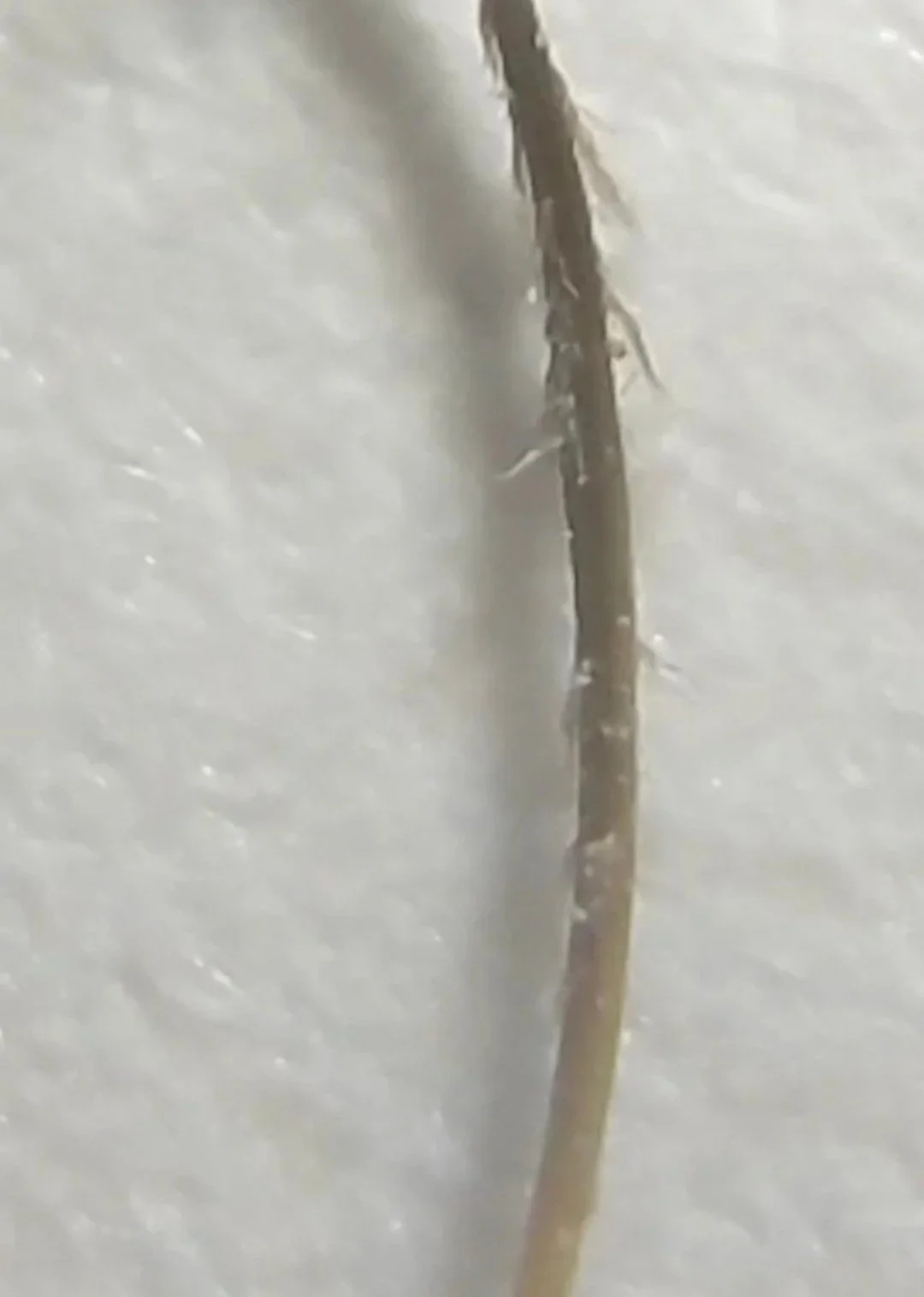
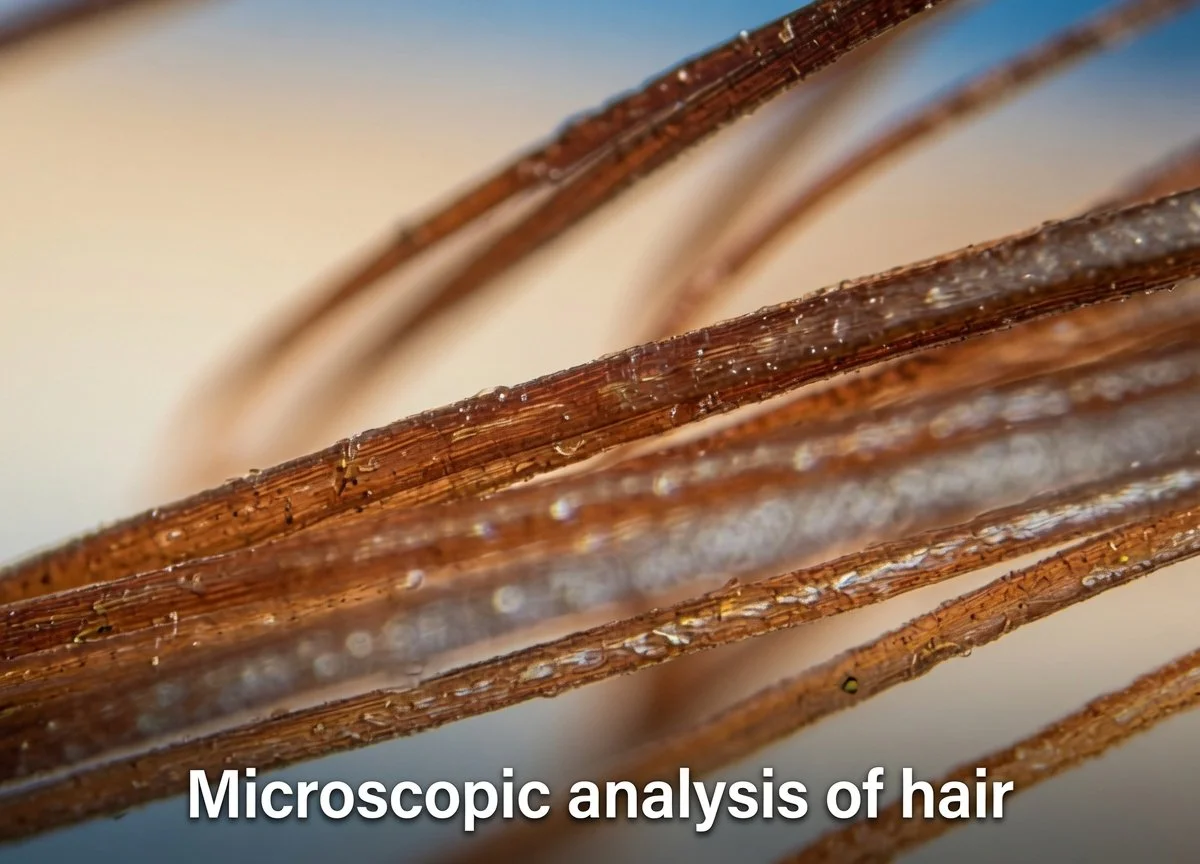
There's something genuinely humbling about looking at your own hair magnified hundreds of times. The images above are microscopic views of hair shaft — that layered, overlapping cuticle structure running along the surface like roof tiles, each one designed to lie flat and lock in moisture, protecting the softer cortex underneath.
I've got two ways of looking at this closely. One is an actual microscope. The other is a handheld device — properly called a dermatoscope, or trichoscope when it's used specifically on hair and scalp — the same tool trichologists use, connected to a screen, letting you examine hair shaft and scalp condition in real time rather than through a fixed eyepiece.
Why Look This Closely At All?
I never trained as a trichologist. But I think there's real value in a stylist understanding hair at this level, not just at the surface. Hair looks deceptively simple from a distance — smooth, uniform, just "hair." Under magnification, it stops being a single thing and becomes a structure: cuticle, cortex, sometimes a medulla, layers with a job to do, each one affecting how the hair behaves, how it takes colour, how it responds to heat and chemical processing, and how much abuse it can actually take before it fails.
That's the systems thinking piece. Hair isn't one material behaving one way — it's several interdependent parts, and what happens to one layer changes what the whole strand can survive. A stylist who only sees the surface is troubleshooting blind. A stylist who understands the fibre underneath the surface can actually predict how hair will respond before committing to a service, rather than finding out afterwards.
Strong, But Not Infinitely Strong
Hair is a genuinely remarkable fibre. Its tensile strength sits somewhere around 150-270 megapascals ( I never knew that!) — in the same range as some steel — and a healthy strand can stretch to somewhere between 30% and 50% of its original length before it breaks, more when wet than dry. A single hair can hold a surprising amount of weight for something so fine. Fascinating facts.
But "strong" doesn't mean "indestructible," and that's exactly the point microscopic analysis makes so clearly. Every colour service, every heat tool, every chemical process asks something of that structure — and damage is cumulative, layer by layer, whether or not it's visible to the naked eye yet.
Bubble Hair — What Happens When Heat Meets Moisture
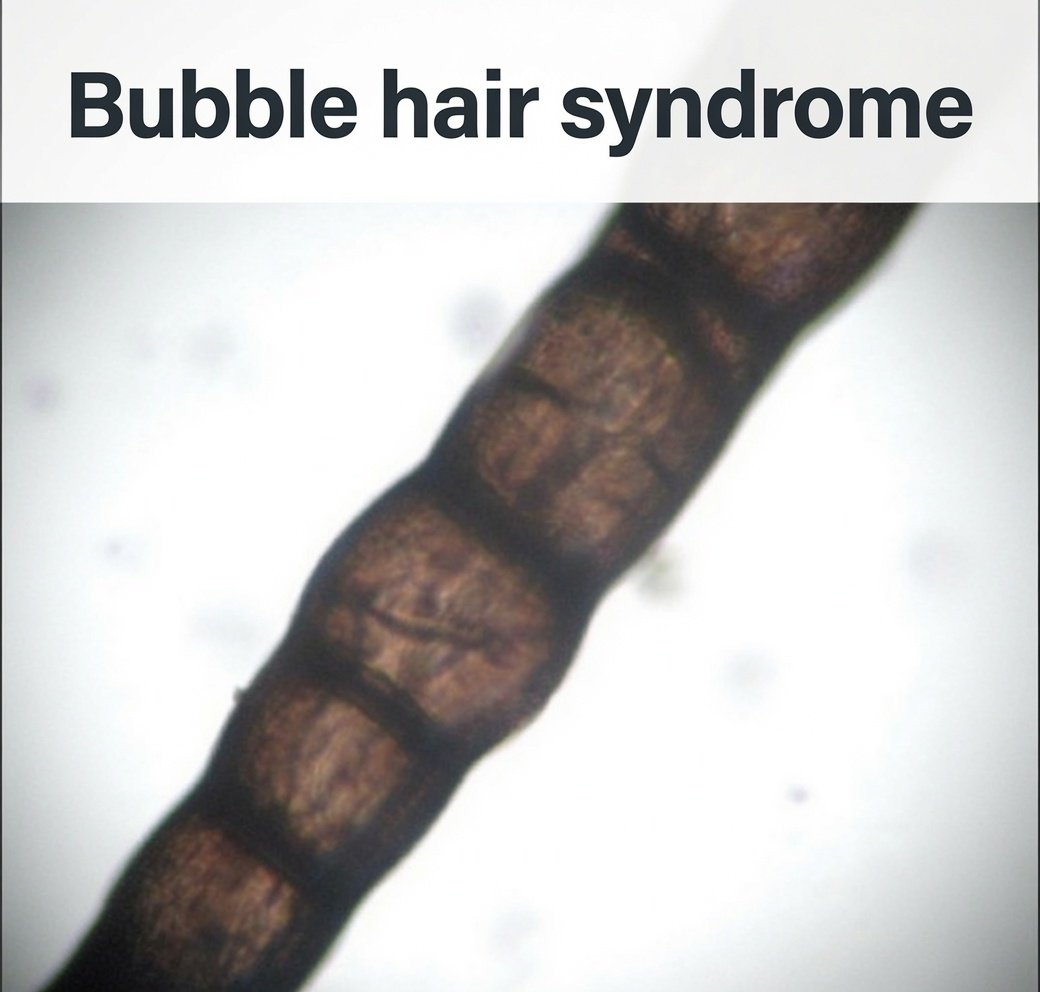
Bubble hair is one of the clearest examples of this. It happens when heat — from straighteners, tongs, or a hairdryer — is applied to hair that's still wet or damp. Hair naturally contains tiny air-filled spaces called vacuoles running through the cortex. When the hair is damp, those spaces fill with moisture instead. Apply enough heat quickly enough — irons at around 125°C for as little as a minute, or a dryer running above roughly 175°C — and that trapped moisture turns to steam and expands, literally blowing small bubbles into the hair shaft from the inside.
Under the microscope, bubble hair looks exactly like what it is: a row of blister-like deformities running along the shaft, weak points where the internal structure has been forced apart. The hair at that point is left brittle, prone to snapping, and there's no repairing it — once those bubbles have formed, that section of hair is compromised for good. Chemically processed hair, already more porous, is even more vulnerable to it.
Seeing It Rather Than Guessing At It
This is really why I think this kind of analysis matters for anyone training or working in this industry. It's one thing to be told "don't use heat on wet hair." It's another thing entirely to see, magnified, exactly what that instruction is protecting against — the moment where a fibre this strong is pushed past what it can absorb, and permanently changed by it. Once you've seen it at that level, it stops being a rule you follow and becomes something you actually understand.