IKAT 2 ©️ HAIR LIKE TEXTILES
IKAT II — Just Seeing If Hair Could Do It
This one wasn't planned out. No real strategy behind it — I just wanted to see if hair could hold a pattern like this.
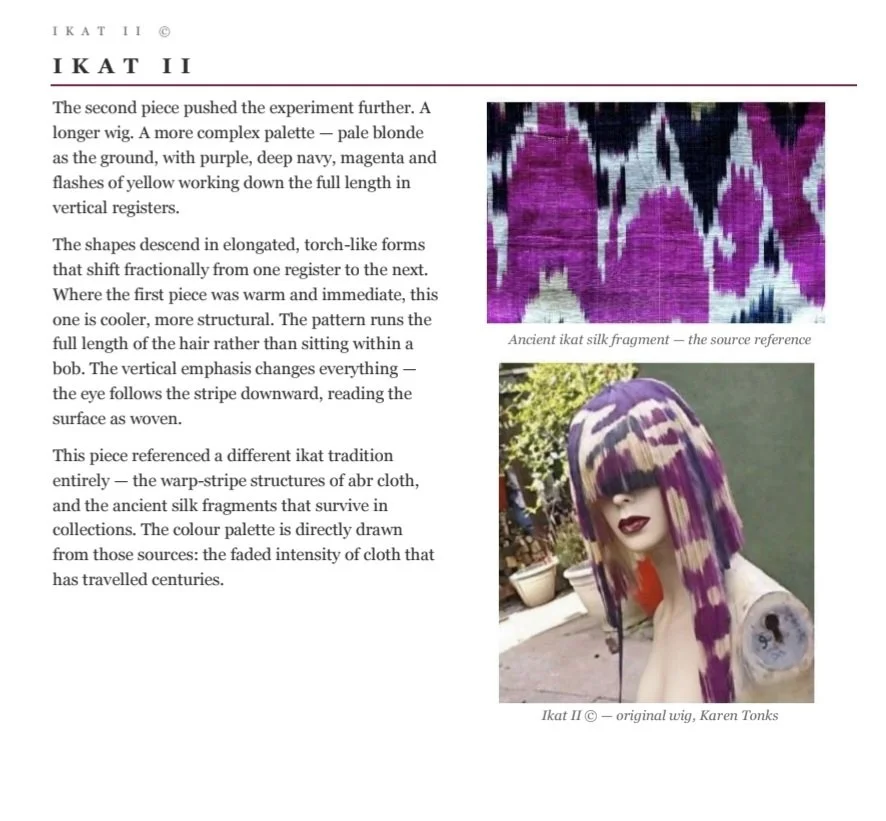
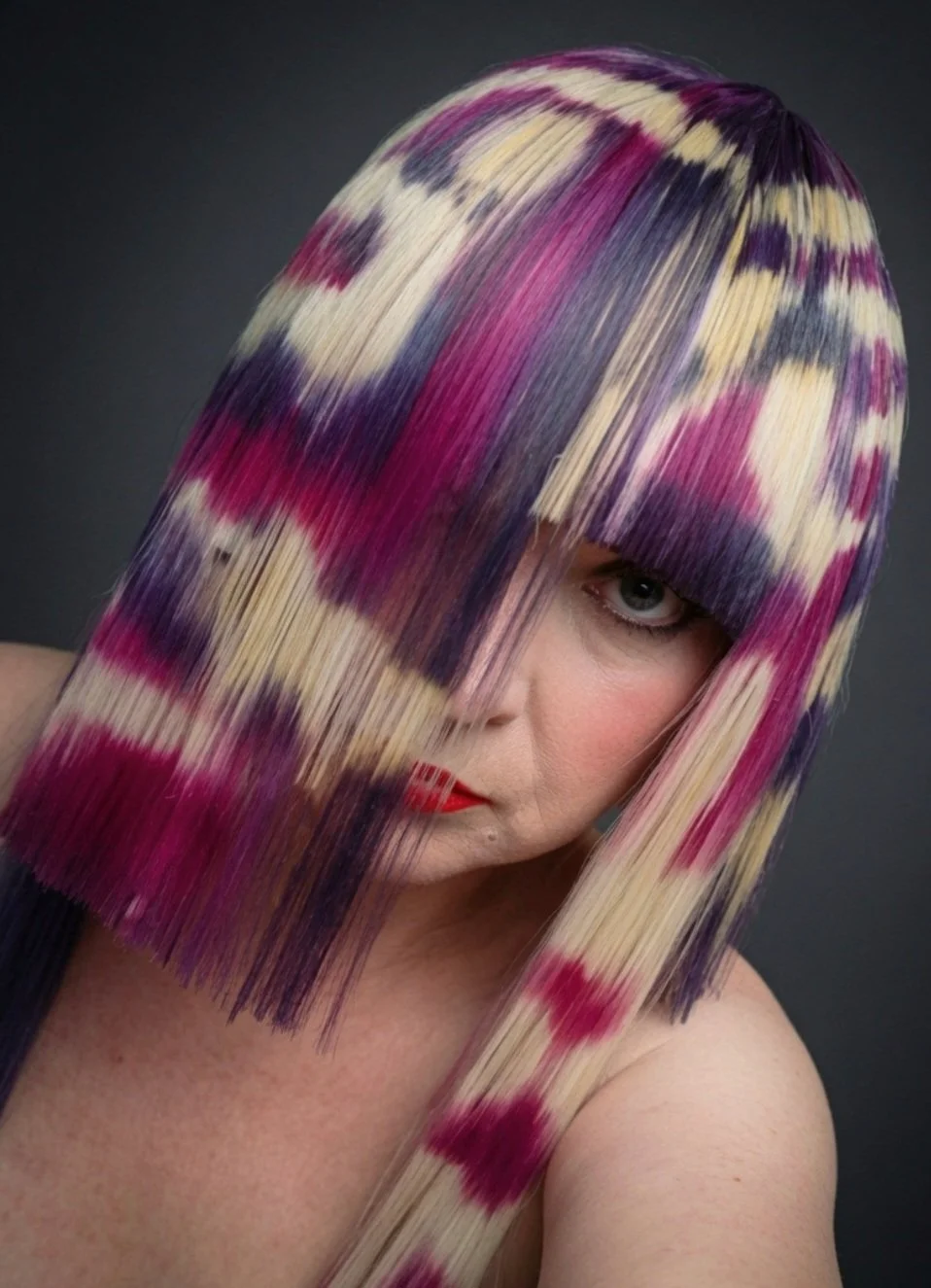
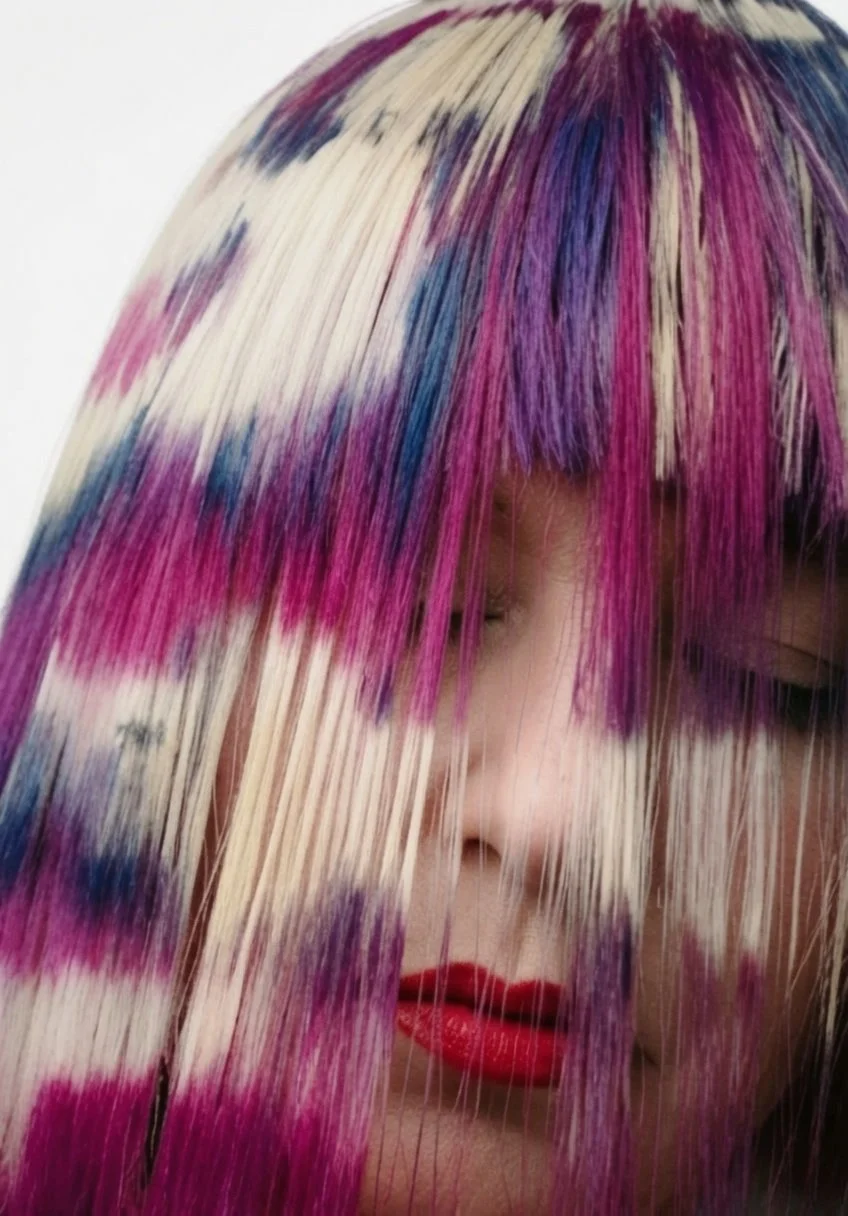
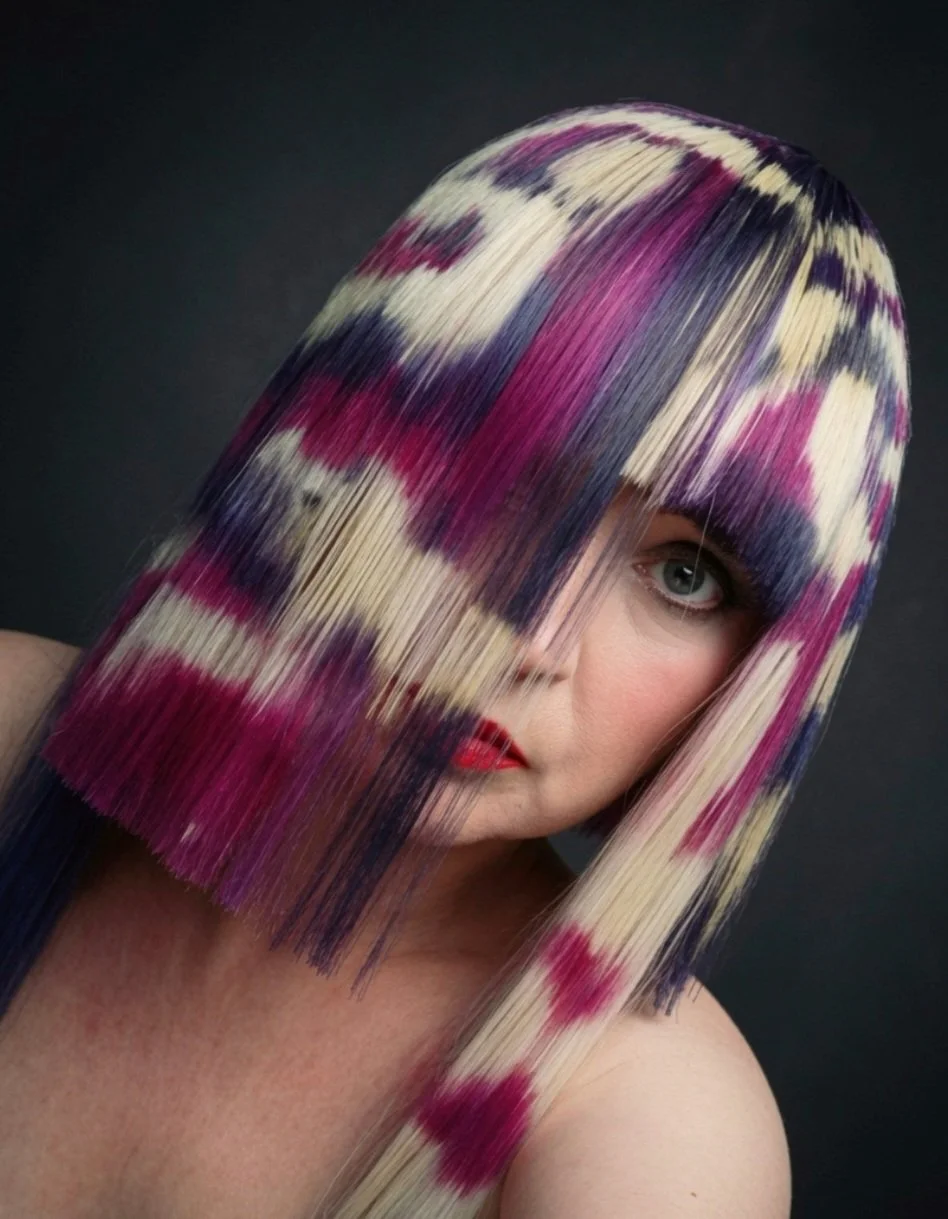
A longer wig, a more complex palette than I'd tried before — pale blonde as the base, with purple, deep navy, magenta and a bit of yellow running down the full length in vertical bands. The shapes shift slightly as they go, register to register, rather than repeating cleanly. It ended up cooler and more structural than I expected, and because the pattern runs the whole length instead of sitting inside a bob, the eye follows it right down.
It was loosely inspired by the warp-stripe ikat cloths — the abr tradition, and the old silk fragments you sometimes see in collections. I liked the faded, travelled look those have, so that's where the colours came from.
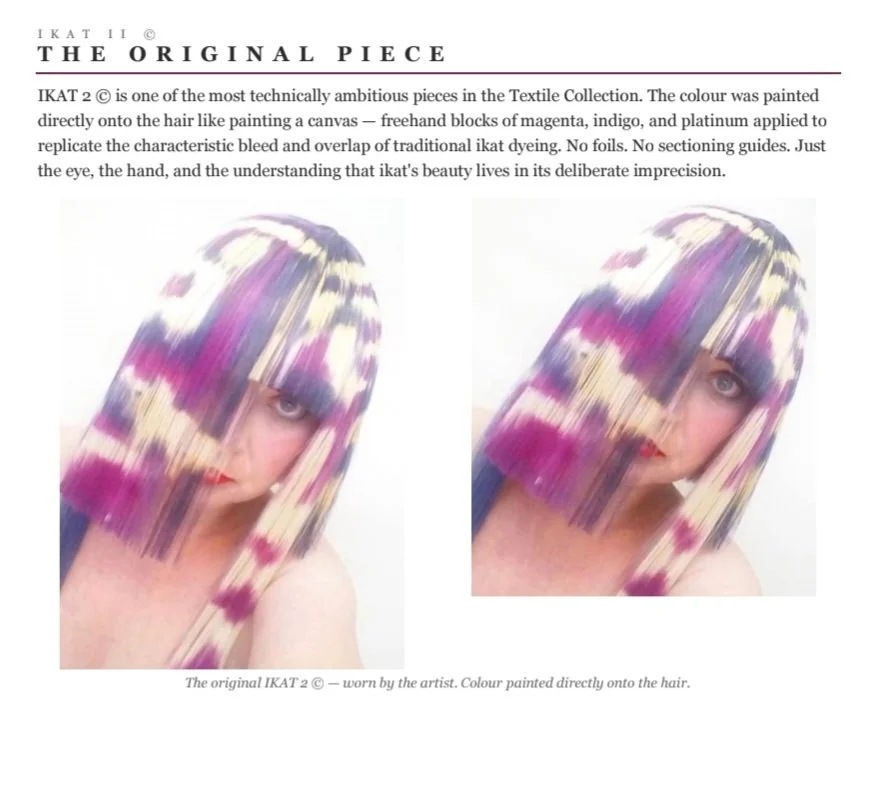
The Original Piece
This was worked on a synthetic wig, which isn't designed to take colour the way real hair does. The colour was painted straight on, freehand — blocks of magenta, indigo and platinum, no foils, no sectioning guides — mixing isopropyl alcohol into the direct dyes to help them set, then leaving it to dry. It held well enough to photograph, which was really all it needed to do. Not a polished process, but that's honestly part of what these experiments were for.
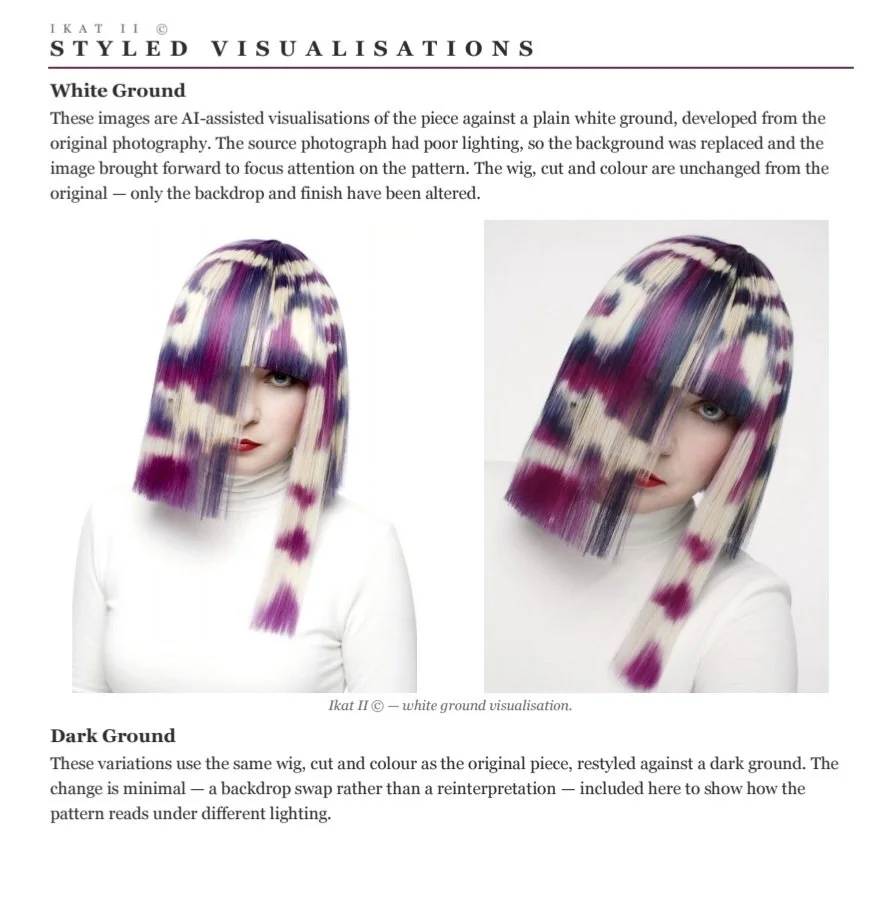
Styled Visualisations
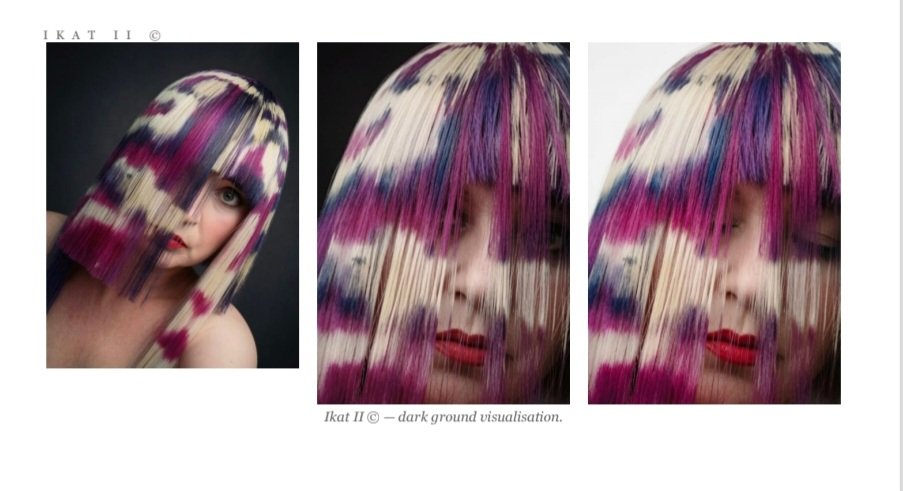
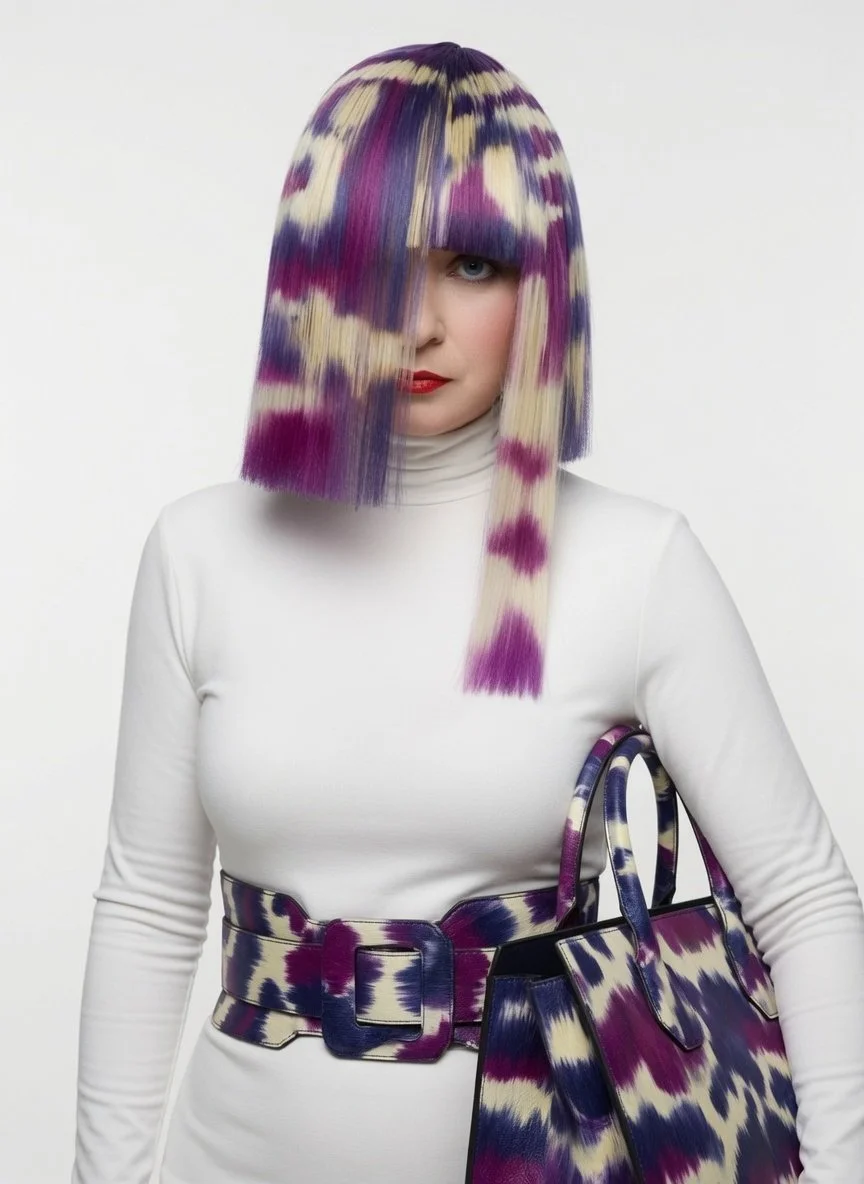
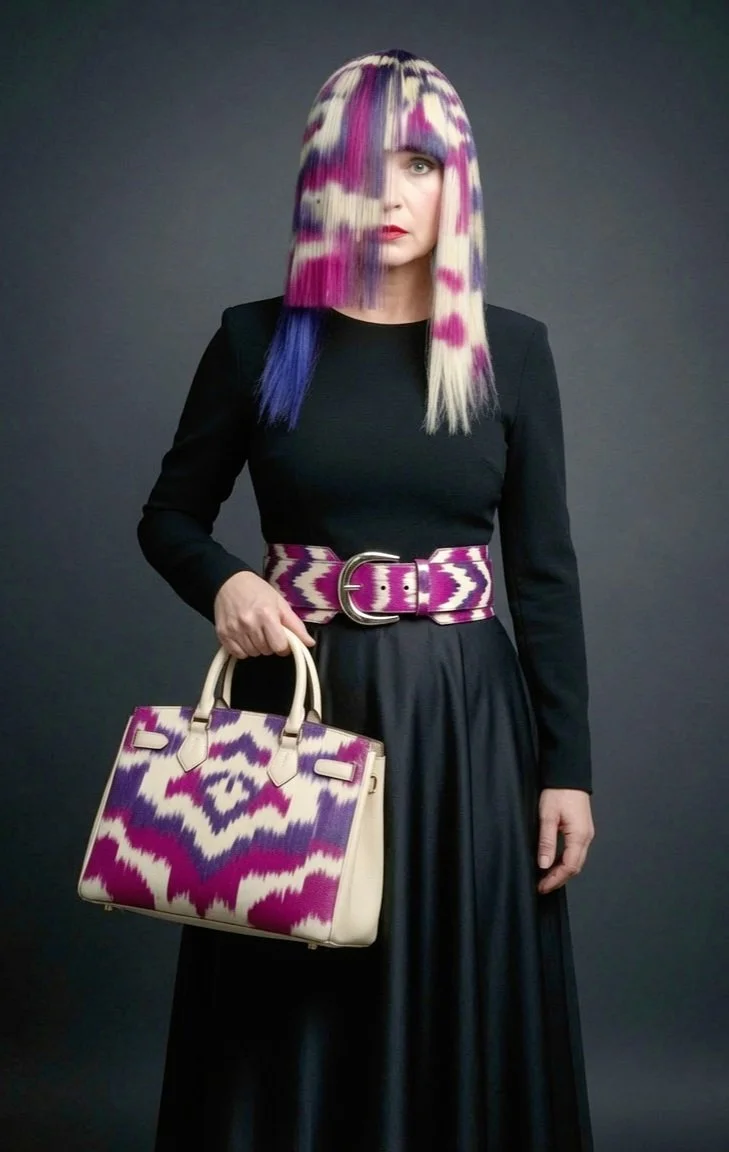
A few different versions of the same piece sit alongside the original photos here. One set is against a plain white background — the lighting on the original photo wasn't great, so I cleaned the backdrop up to make the pattern easier to see. Another set is against a dark background, which is barely a change at all, just a different backdrop to see how the colours read differently.
Editorial Pairing
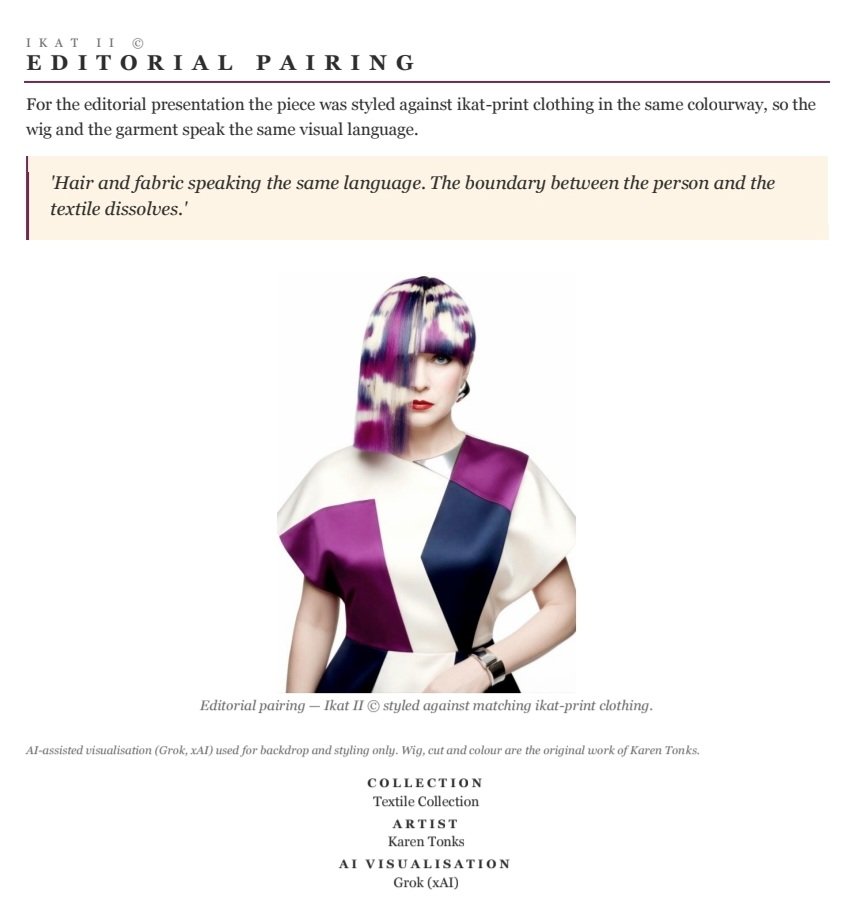
I also had it styled against some ikat-print fabric in a similar colourway, mostly just to see the hair and the cloth sitting next to each other.
On Whether This Would Ever Work in Real Life
Something I've reflected on since: this was never really tested for durability, and it was done on synthetic hair. I only work with human hair now, so if I tried this again, that's what I'd use.
There are a couple of ways I'd approach it. One option is to paint the pattern onto separate wefts first, then cornrow small cane rows either side of a centre parting on a long human-hair bob (blonde or even black) and sew the patterned wefts in along that part. The advantage there is that it's removable — you'd take it out after a photoshoot, or after a festival or a night out, so durability doesn't really become a question. It was only ever there for a few hours.
The other option would be to work directly onto the wig or the hair itself — freehand, layering the colours into a top section only using a balayage-style clingfilm veil, so the pattern stays contained and doesn't bleed into the sections underneath. That route would need drying through with heat to help the colour lock in, then rinsing in the coldest water manageable. That version is more permanent, so washing and wear would matter more.
I haven't gone back and tried either version, so I can't say for certain what either would look like. This is reflection, not a tested method.
That's really the nature of a piece like this, though. It's an idea, put out into the open — some people will look at it and just respond to it, others will look at it and think they could take the same concept somewhere different, or do it better. Both reactions are exactly the point.
AI-assisted visualisation (Grok, xAI) used for backdrop and styling only.
Wig, cut and colour are the original work of Karen Tonks.
If you're struggling and need to talk to someone, Samaritans are free to call anytime on 116 123, or you can reach SHOUT by texting 85258.