OPALESCENCE 2015
Opalescence
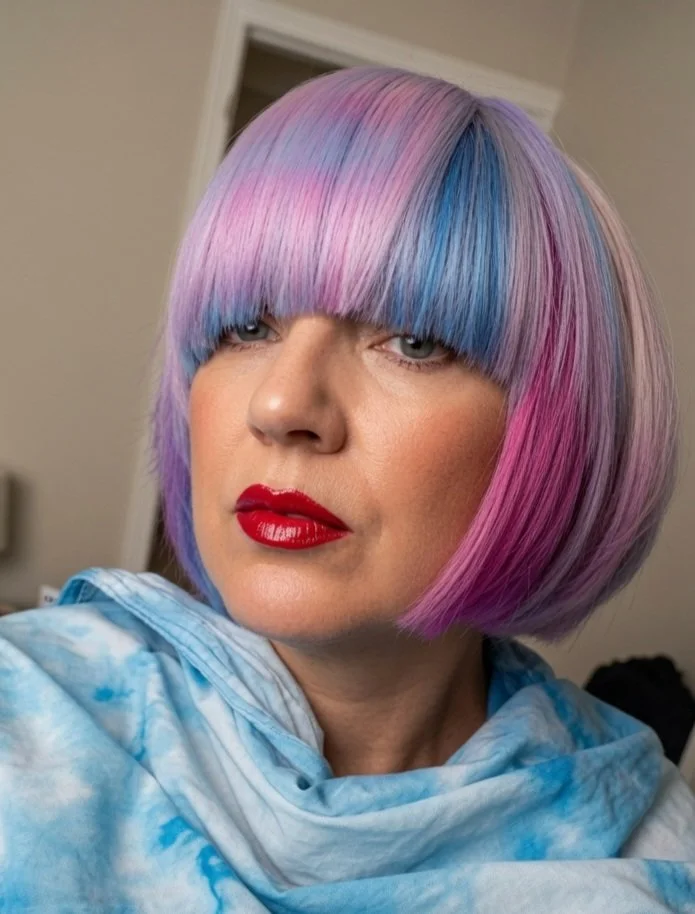
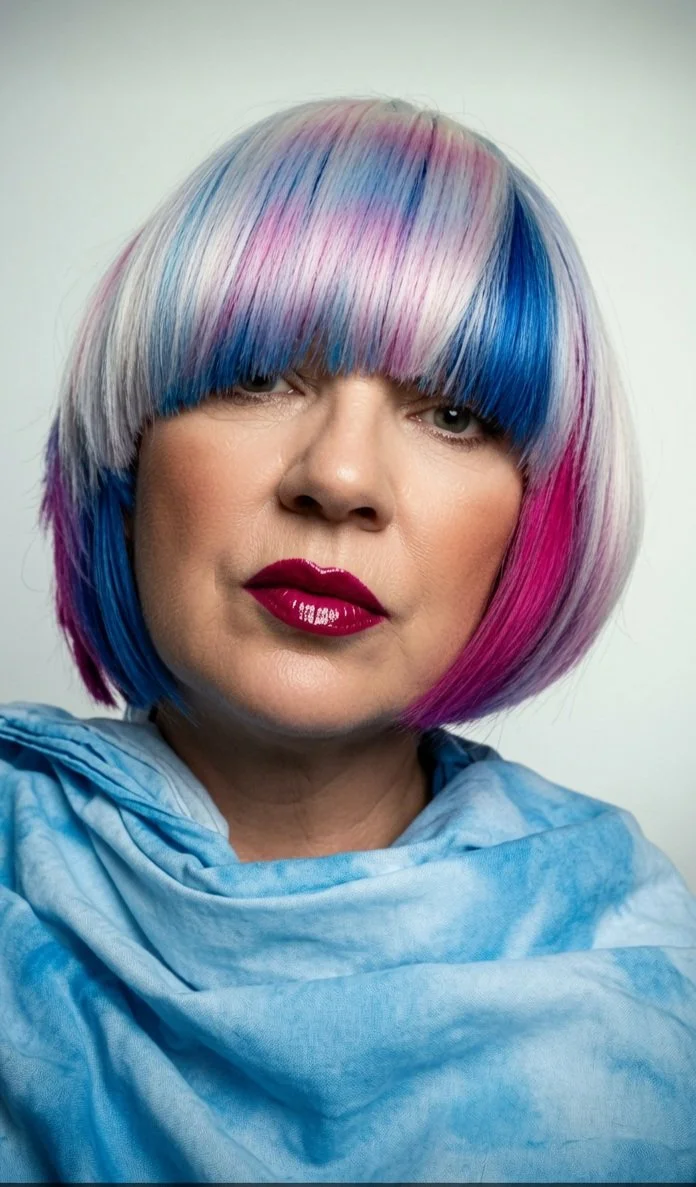
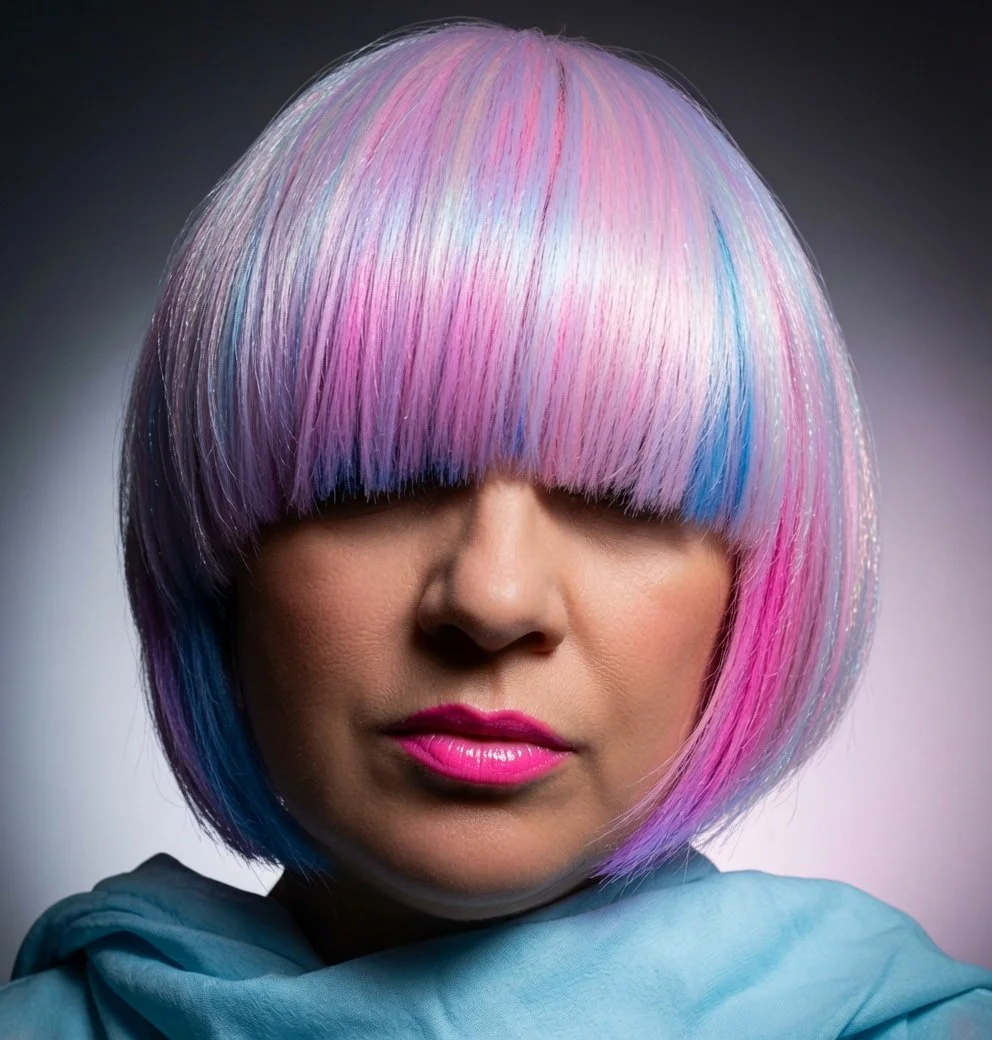
An opal doesn't hold one colour. Tilt it, and the light breaks apart into blue, then pink, then violet, then back again — the same stone showing you something different depending on where you're standing. That's the idea behind this piece.
The base cut is a sharp, blunt-fringed bob — geometric, almost architectural, so the shape holds still while the colour does all the moving. Blue threads into lilac, lilac lifts into pale opal white, then drops into hot pink and magenta at the ends. Nothing blends quietly here; the colour shifts in visible bands, the way light does across the surface of the stone itself. It's not meant to look like one flat colour from any single angle — it's meant to change as you move around it, the same way real opalescence does.
These images actually show the idea at two different points in its life. One version carries a soft baby-pink sheen through the palette; the other sits on a lighter blonde-to-white base with the same colour blocking underneath but no pink toner over it. That's not an editing inconsistency — it's the real evolution of the design, the same concept revisited and adjusted at different times.
There's a reason the eyes matter as much as the hair in this one. In two of the images they're fully shadowed by the fringe, half-veiled, the colour doing all the talking. In the other, the gaze is direct and unflinching, daring you to look past the colour rather than just at it. Same piece, same hair, two entirely different ways of being seen. That contrast is the point: opalescence isn't a fixed thing. It depends on the light, and it depends on where you're standing when you look at it.
A note on process: the original photographs were taken on a basic device with limited image quality, so I used editing software to clean up and sharpen the images — the prompt was simply to make them clear, not to alter the design. The cut, the colour, and the styling are exactly as done. The fringe itself was rarely cut down properly, even on me — every piece was designed to be reusable, and a wig's final cut has to be bespoke to whoever ends up wearing it. So the length over the eyes was never really a styling choice. It was just a design still waiting for its real wearer.