Demons and Angels: Carl Jung
DEMONS AND ANGELS
On the shadow self, and why none of us are purely one or the other
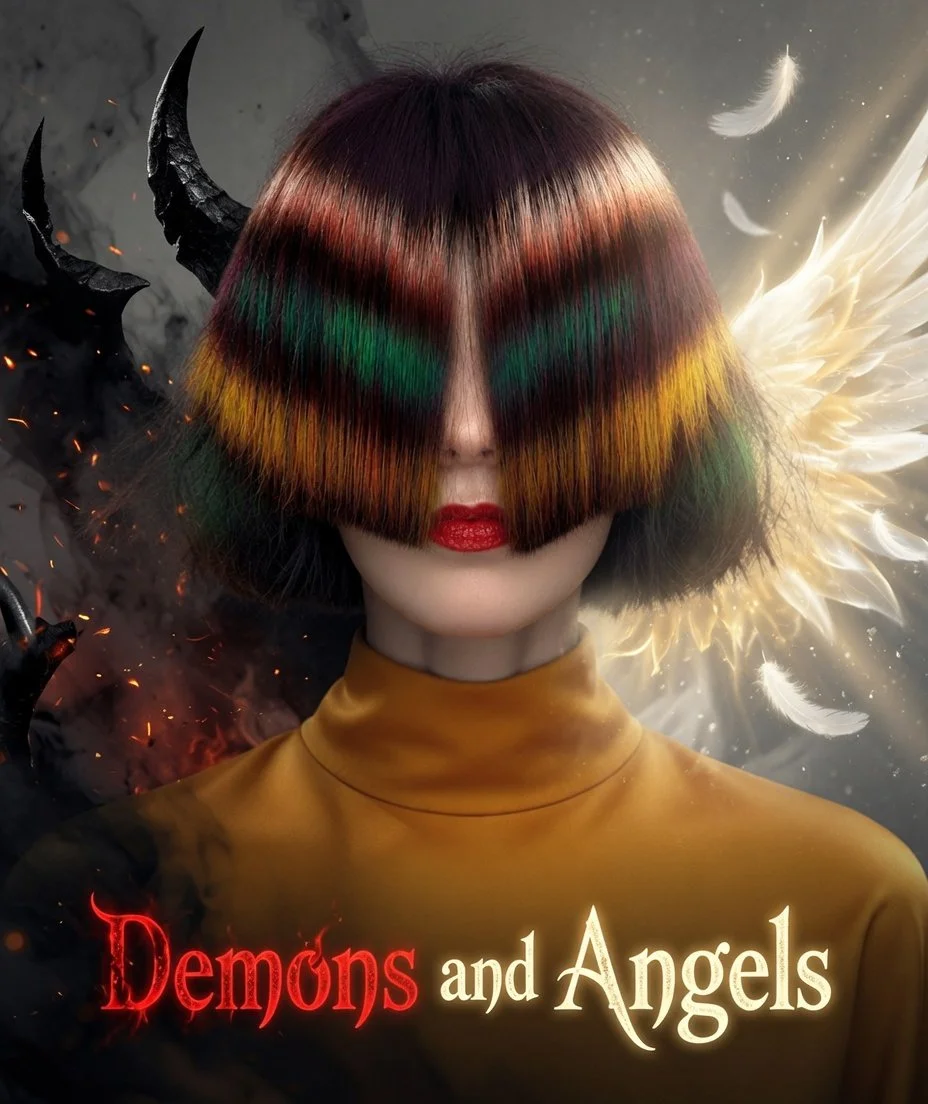
Most people looking at an image like this will read it instantly: demons on one side, angels on the other, good versus evil laid out in horns and feathers. That reading isn't wrong exactly, but it misses what's actually interesting about the idea.
Carl Jung wrote about something he called the shadow — the parts of ourselves we push down, deny, or refuse to look at directly. Not necessarily evil. Just unacceptable, somehow, to the version of ourselves we'd prefer to present to the world. Anger we weren't allowed to express. Jealousy we're ashamed of. Selfishness we've been taught to hide. Every human carries a shadow, because every human has parts of themselves that got labelled unacceptable somewhere along the way, usually very early on.
The instinct most people have is to keep that shadow buried as deep as possible. But Jung's argument was closer to the opposite: the more repressed the shadow stays, the more control it quietly has over us. Denied anger doesn't disappear — it leaks out sideways, in ways we don't recognise or take ownership of. The more we shine a light directly into that part of ourselves, the less power it has to operate unseen.
That's uncomfortable to sit with, because "shadow" sounds sinister. But there's real strength hiding in there too, not just the parts we're ashamed of. Assertiveness that got mistaken for rudeness as a child. Anger that, properly integrated, becomes healthy boundary-setting instead of festering resentment. The shadow isn't just the demon side of the image — it's also raw material that, looked at honestly, can be genuinely useful.
None of this is an argument that we're all secretly deplorable underneath a thin veneer of civility. It's the opposite point, really. If we let ourselves believe we're entirely angel and other people are entirely demon, we're not seeing clearly — we're just protecting our own self-image at the expense of an honest one. That split, angel on one side, demon on the other, feels satisfying because it lets us stand fully in the light and put everything difficult somewhere else, onto someone else. But it isn't true. Nobody is purely one or the other. The work isn't choosing a side. It's being willing to look at both halves of the same face.