CUBIST CASCADE ©️
Cubist Cascade©
Part of the Cubist Collection
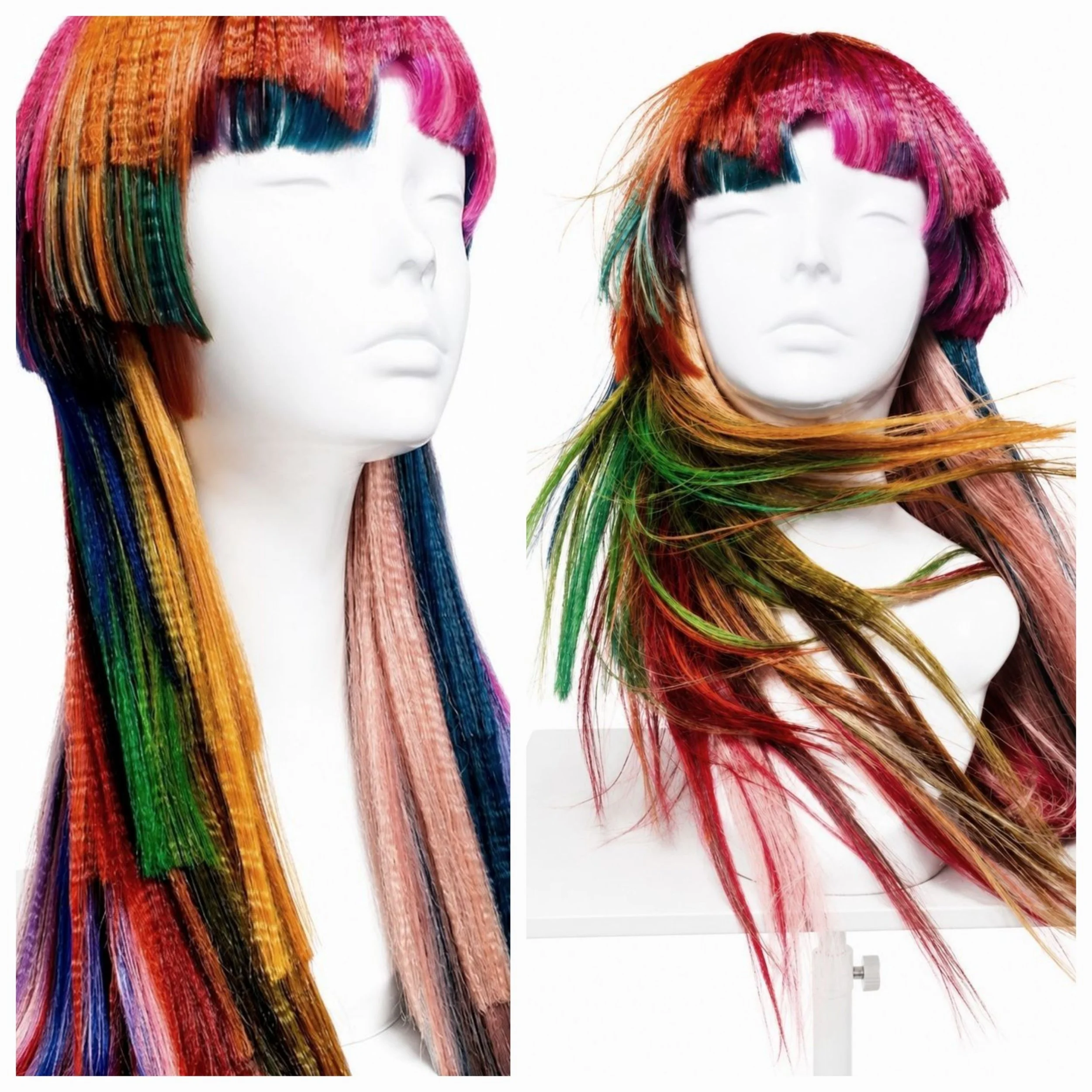
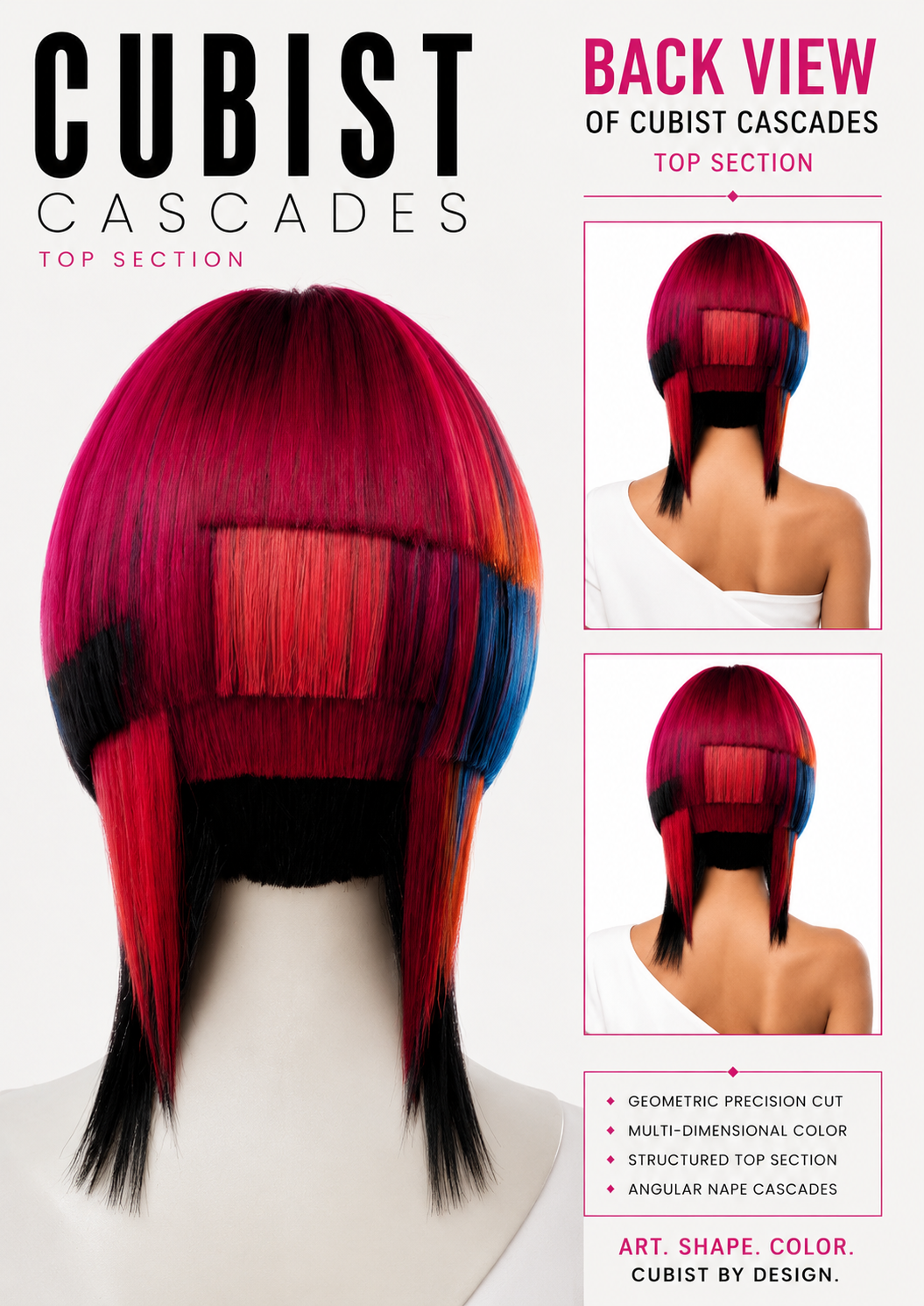
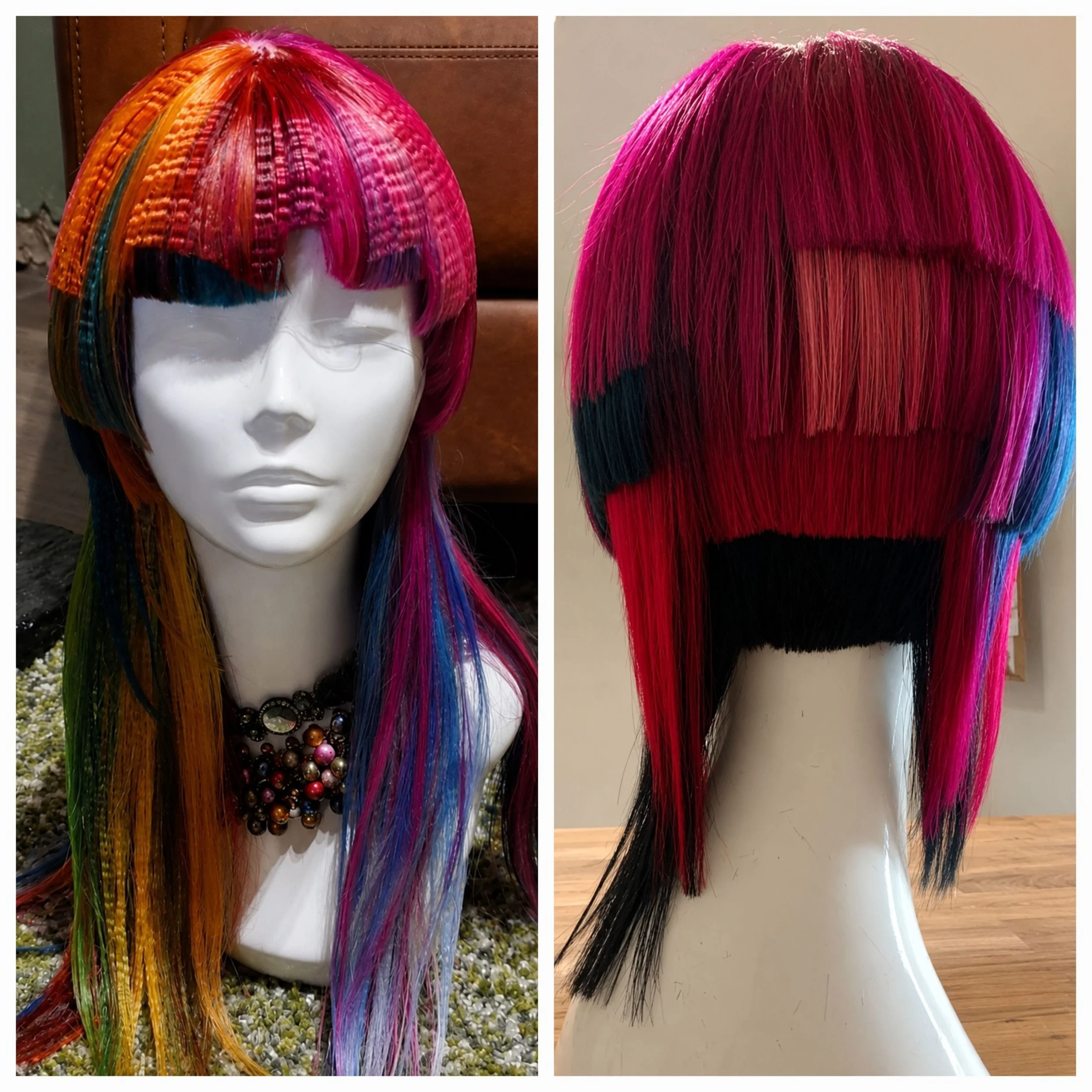
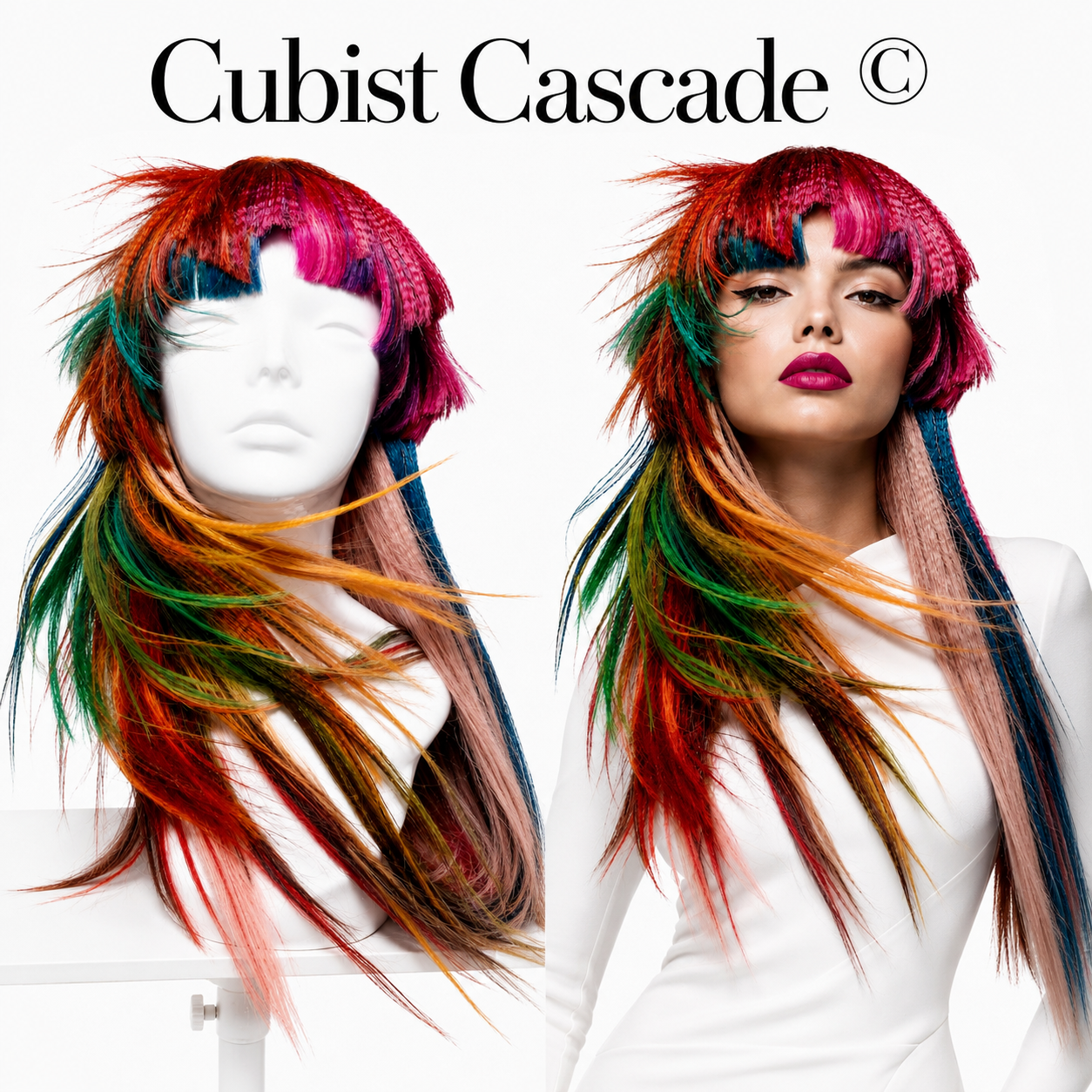
The name comes straight from what the piece actually does. Cubism breaks a subject into distinct, angular planes and reassembles them — and that's exactly what happens here. The colour and the lengths are built in separate blocks and staggered so they fall unevenly, breaking the hair up into visible planes rather than one smooth mass. Cascade, because once those planes are in motion, that's what they do — cascade down and past each other.
It laid the groundwork for a piece that came later, Modular Prism© — same underlying principle of building in separate, individually coloured components before assembly, but taken further into a genuinely modular system, where every element could be detached and reconfigured using small jewellery attachments. Cubist Cascade© came first, with that "build in parts, colour each part on its own" thinking producing one fixed, dramatic silhouette rather than an interchangeable system.
How It Was Built
The base wig was colour-blocked by hand into pink, gold, teal and blue sections at the crown. The long back piece was deliberately left in place to hide the wire structure underneath as the extension length came together. That length started life as human hair on invisible wire, but the initial thickness wasn't enough on its own, so more pieces were sewn in to bulk it out properly. Everything began blonde, with only slight tonal variance between pieces — so each length was coloured individually, by hand, rather than relying on any existing colour difference to do the work. Once coloured, the pieces were cut to fall at different lengths — the cubist planes — and crimped through, which is what gives the finished cascade its textured, layered movement rather than a flat sheet of colour.
Capturing It in Motion
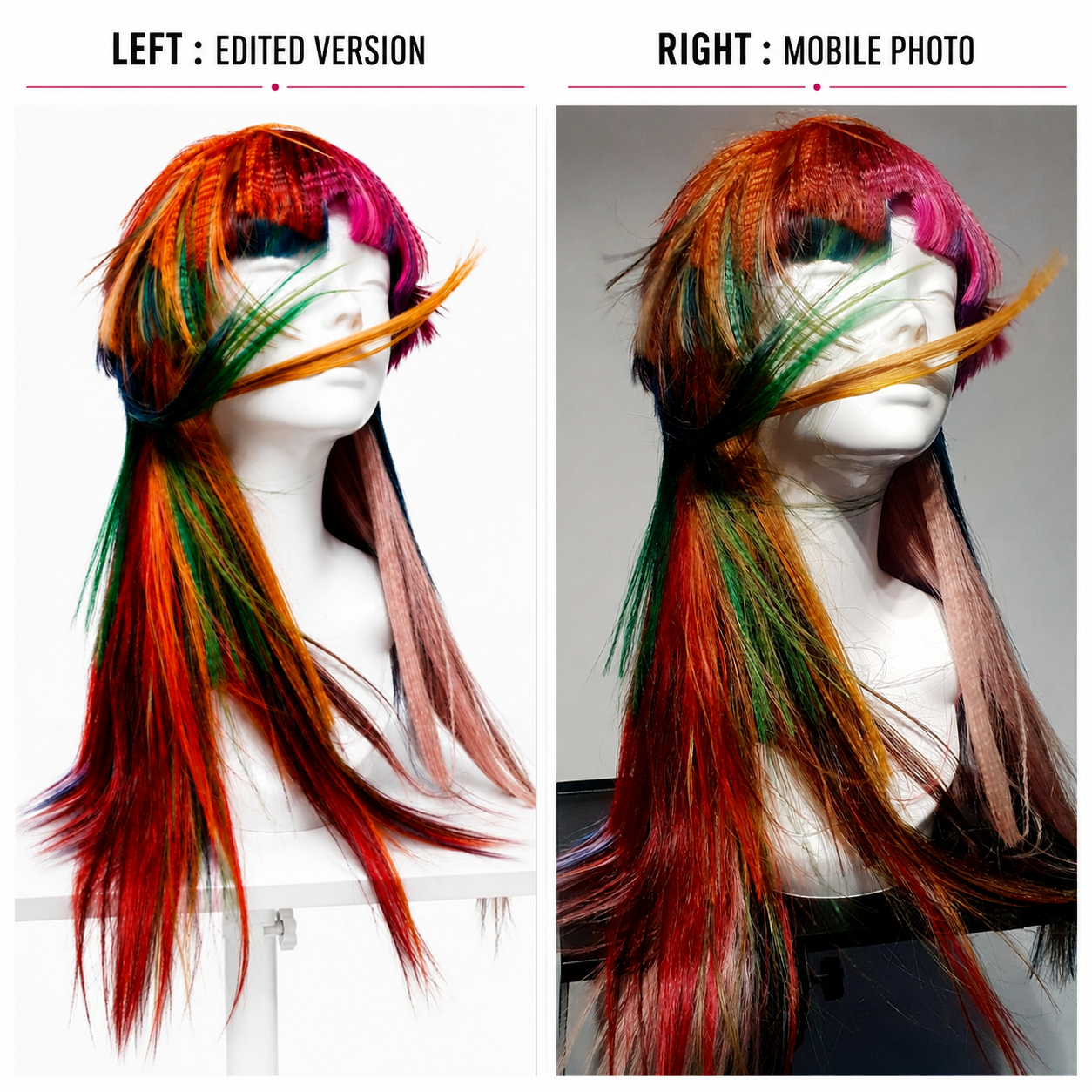
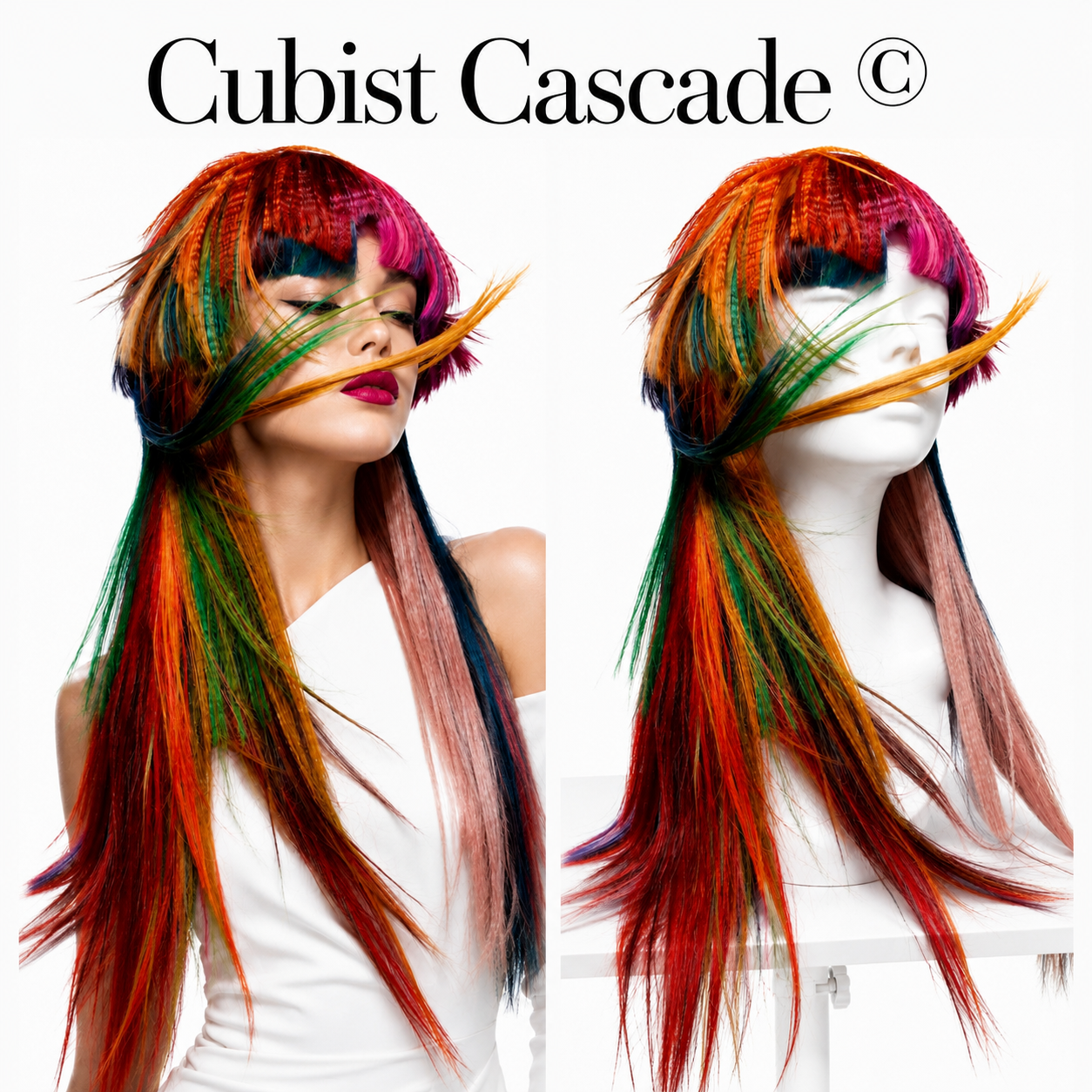
The movement in these images is real. The finished piece was set on a display head, and a hairdryer was used to lift and move the hair while photos were taken mid-motion — catching the actual physics of how those staggered, crimped lengths lift, separate, and fall. From there, the background was cleaned up to a crisp white, and the same captured movement was used as the reference to generate a version showing the piece worn by a model — so what you're seeing in the "worn" images is the real motion, carried faithfully into a styled, editorial context.
AI tools (Grok, xAI) used to clean the background and generate the worn, editorial presentation, using the real captured motion as reference. The piece, its construction, and its movement are the original work of Karen Tonks.